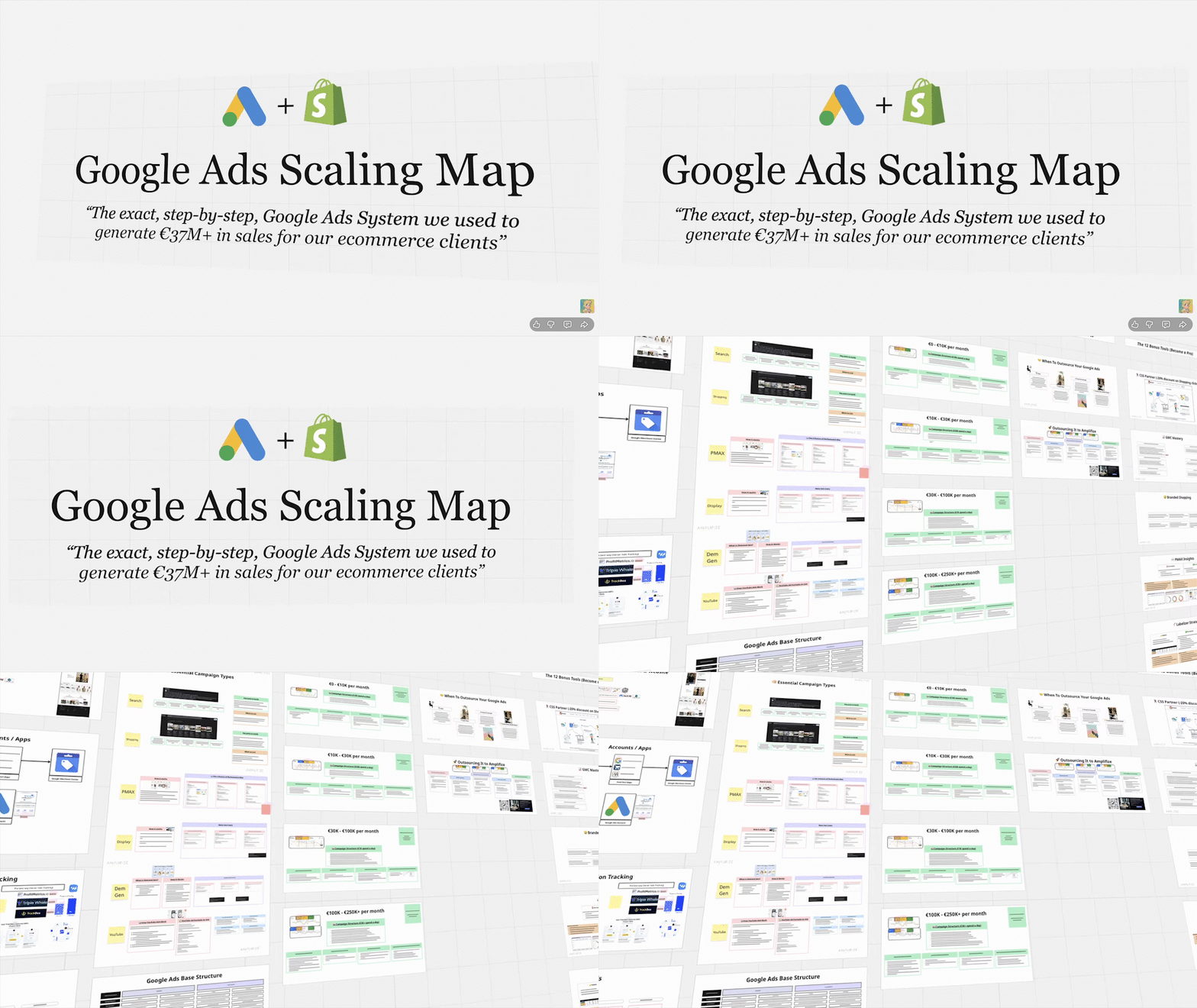
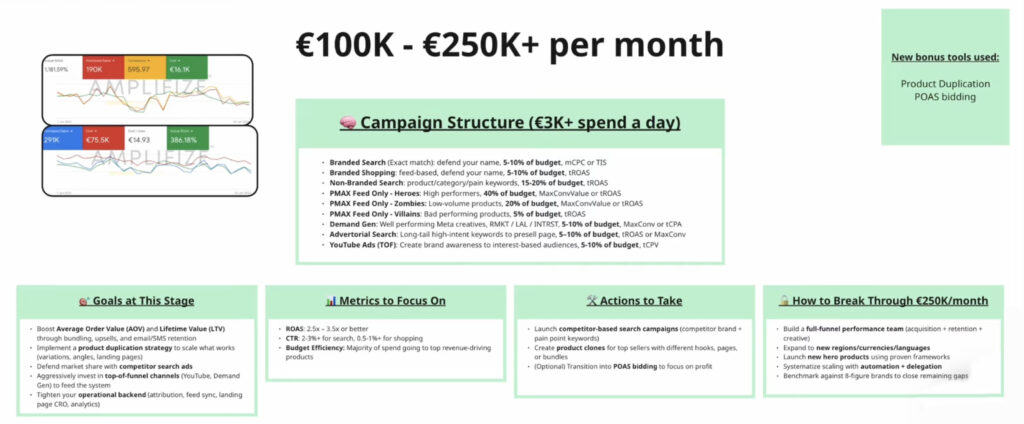
You’ve probably seen them. The comprehensive, multi-stage Google Ads scaling maps that pop up on LinkedIn, get a thousand comments, and promise a clear path to growth. Recently, a very good one from Floren and the Sid team caught my eye. It’s comprehensive and I like a lot of what I’m seeing.
But. (You knew there was a “but” coming).
As someone deep in the trenches, I have to offer a different perspective on a few key areas. I think some of the advice is overly complicated where it should be simple, and I fundamentally disagree with their recommended use of Performance Max. In fact, I believe it should be reversed entirely. This isn’t just about being contrarian; it’s about applying practical, hard-won experience to avoid the common pitfalls these frameworks can accidentally create.
Go Beyond the Article
Why the Video is Better:
- See real examples from actual client accounts
- Get deeper insights that can’t fit in written format
- Learn advanced strategies for complex situations
The Foundational Flaws: Where Most Scaling Frameworks Go Wrong
Before we even get to campaign types and advanced tactics, a couple of foundational pieces of advice in this roadmap need to be challenged. Getting these wrong at the start is a recipe for wasted budget and frustration.
Overcomplicating Keyword Research is a Trap
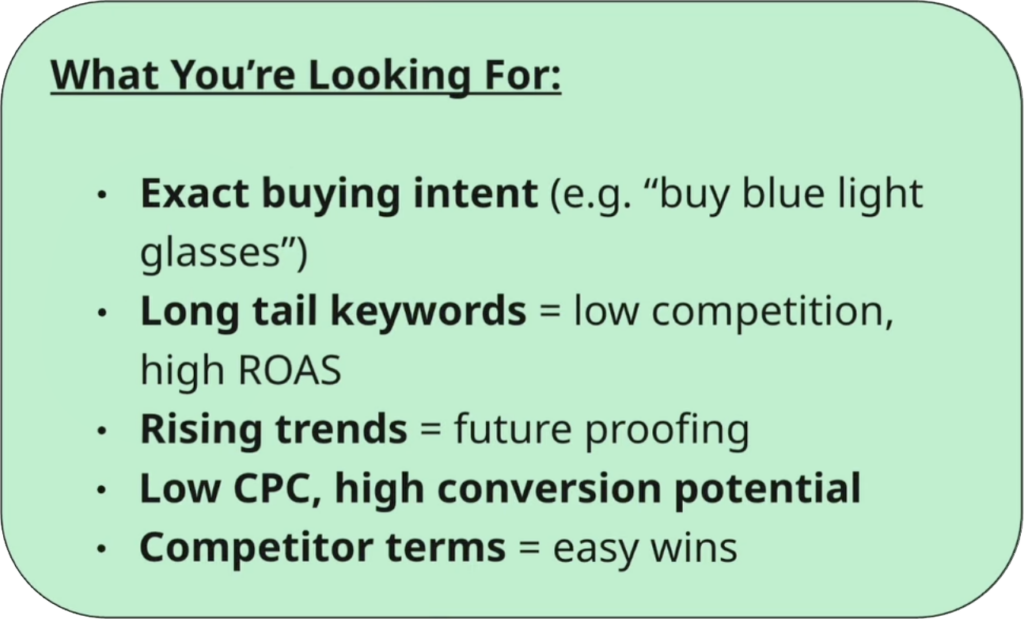 The map dives deep into keyword research, and honestly, I think it’s a mistake to even include it with this level of complexity. For e-commerce, keyword research is actually very simple. We have products, and people search for those products.
The issue is that there’s an old fallacy that you must chase “exact buying intent” or long-tail keywords. I see this trip people up all the time. If you sell running shoes, you obviously shouldn’t start by bidding on “running shoes.” But the bigger mistake is to never go after broader terms like that. Especially in smaller markets, like many in Europe, you’ll get almost no volume from hyper-specific long-tail terms. If your niche is “blue light glasses,” a long-tail Danish keyword might get you five clicks a month.
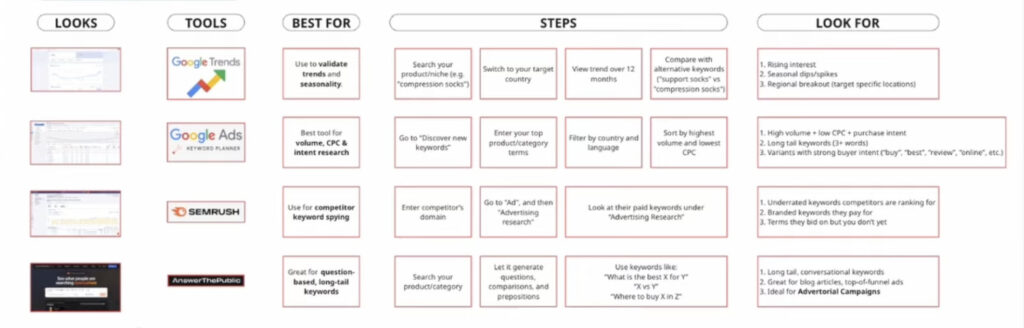
My advice is to start broader and more generic than you think. You’ll get data faster and won’t starve your campaigns of volume from the very beginning.
The Biggest Mistake: Starting with Branded Search & Max Clicks
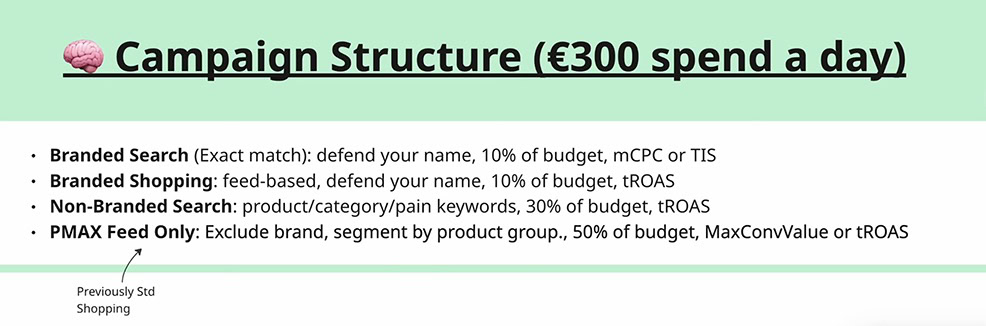
The framework suggests starting with branded campaigns, allocating up to 10% of the budget there. I couldn’t disagree more. This is the single biggest mistake I see new advertisers make.
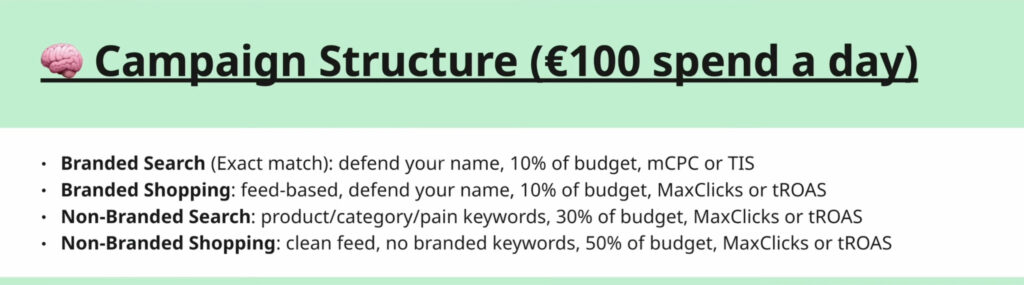
Here’s my rule: you shouldn’t spend a single dollar on branded search until you’re hitting at least €5,000-€10,000 a month in revenue. If you’re already running Meta ads or have some brand recognition, people are already searching for you. Spending your limited initial budget to capture those clicks is a waste.
 Then there’s the recommendation to start with the Maximize Clicks bidding strategy. I understand the logic—you need data to get started. The problem is that Maximize Clicks does exactly what it says: it finds the cheapest clicks. And which auctions have the cheapest clicks? The ones with the lowest conversion potential. This creates a doom loop where you never get enough conversion data to switch to a ROAS-based strategy, so you’re stuck burning money on low-quality traffic.
I would much rather see an account get off Maximize Clicks as fast as humanly possible. If your target ROAS is 300%, I’d prefer you set a tROAS goal of 100% and run at a loss. At least then you’re feeding the algorithm the right kind of data to build from.
My Disagreement on Performance Max: Why the Order is Backwards
This is my most significant point of contention. The roadmap suggests a progression from Standard Shopping to a feed-only Performance Max campaign once you hit the €10-30k/month spend level. This is strategically backward.
The Myth of Graduating to PMax Feed-Only
Moving from Standard Shopping to a PMax feed-only campaign isn’t really an upgrade. The underlying shopping algorithm is more or less the same. The only meaningful extra you get is dynamic retargeting, which is a good thing, but it typically accounts for about 2% of your spend. It’s not an impactful change that justifies it as a “next step” in scaling.
The Smarter Approach: Start with PMax, Not Standard Shopping
 If I were building this framework, I would do the opposite. I would recommend starting with a PMax feed-only campaign from day one.
Why? One critical reason: PMax allows you to use the “Maximize Conversion Value” bidding strategy from the start. To this day, Standard Shopping does not have this option. This is a huge disadvantage. Starting with a bid strategy focused on value, rather than just clicks, is a fundamentally better way to launch and train the algorithm. You can start optimizing for revenue from your very first click.
Scaling Beyond the Basics (When Ad Spend Tiers Don’t Matter)
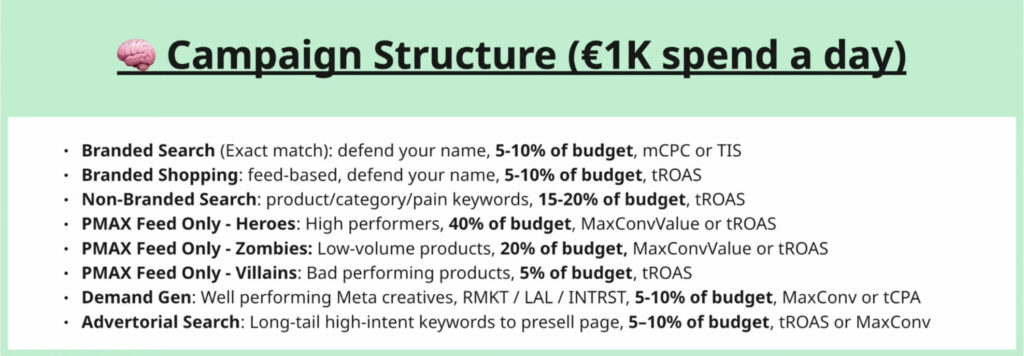
The framework breaks down stages by monthly ad spend. While it’s a neat way to organize a chart, it’s not how scaling actually works. Growth isn’t linear, and your strategy should be dictated by performance plateaus, not arbitrary budget levels.
Break-Even is the New Profitable (In the Beginning)
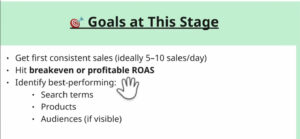
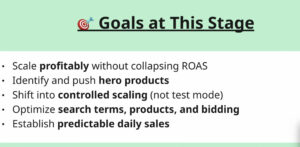
The goal in the initial stages shouldn’t be profitability. It should be survival and data acquisition. You should expect and plan to run at a loss for the first couple of months. As you scale, the goal should shift from an intentional loss to break-even. Hitting a stable, break-even point is a massive win. It proves the model and gives you a foundation to push for profit later.
When to Actually Use Demand Gen
The map introduces Demand Gen and video at the €30-100k/month stage. I think this is premature for most businesses. You shouldn’t touch these channels until you are starting to maximize your spend on Search and Meta. When the incremental revenue you get for every dollar you spend on Meta starts to diminish, that’s when Demand Gen can be a valuable tool to feed the funnel. It’s a supplemental channel, not a primary growth driver at this stage.
The Truth About POAS: It’s Not for Everyone
Later in the framework, there’s a suggestion to transition to POAS (Profit on Ad Spend) bidding. This is a powerful tool, but it comes with a massive caveat that’s often ignored. It is only useful if you have significantly different profit margins across your products.
I see so many advertisers switch to POAS and see no performance change. When I ask about their margins, they say, “Oh, they’re all around 48%.” In that case, you’ve just added a layer of complexity for no reason. All you did was tell Google to optimize for 50% of your revenue, which will produce the exact same result as optimizing for 100% of your revenue.
The Real Engine of Scale: New Hero Products
This is the most important point that gets lost in tactical frameworks. You cannot optimize your way to infinite growth with a handful of products.
We had a client who sold home fitness equipment. During COVID, their business 10x’d and they scaled to the moon. But they made a fatal mistake: they never successfully added new hero products. Their entire business was built on the temporary, massive interest in a few core SKUs. When that interest inevitably declined, their revenue collapsed, and the overhead they’d built to support the 10x business drove them into bankruptcy.
The ultimate ceiling on your Google Ads account is your product catalog. At some point, asking “How do I scale this one product further?” is the wrong question. The right question is “How do we get into more searches?” The only way to do that is with new products in new categories that create more exposure. True, sustainable scale is a product strategy, not just a bidding strategy.
[TL;DR]
- Don’t Overcomplicate Keywords: For e-commerce, start broader than you think. Obsessing over long-tail keywords is an old fallacy that kills volume.
- Avoid Branded & Max Clicks Early On: Don’t spend on brand until you have significant revenue. Get off Maximize Clicks immediately, even if it means setting an unprofitable tROAS goal to start.
- Reverse the PMax Strategy: Start with PMax feed-only from day one to access “Maximize Conversion Value” bidding. Don’t “graduate” from Standard Shopping to PMax.
- Aim for Break-Even First: Expect to be unprofitable for the first few months. Scaling successfully means moving from a planned loss to a stable break-even point before pushing for high profit.
- Scale is a Product Problem: The ultimate driver of growth isn’t ad optimization; it’s launching new hero products to enter new searches and expand your total addressable market.