Most of you don’t want to admit this, but if you really look at your process, you’re guessing what seasonal bid adjustments (SBAs) to run during Black Week. You set them based on gut feel or a vague memory of what you think worked last year. You have no real idea if you underspent or overspent based on the ROAS you got.
For this year, I built a free script that fixes it. You run it once, and it analyzes last year’s Black Friday performance across CPC, ROAS, conversion rate, and AOV. It then shows you exactly what SBA percentage to set for each day of Black Week. In this article, I’m going to walk through how to use it and show my learnings from two very different accounts we run at Savvy.
Go Beyond the Article
Why the Video is Better:
- See real examples from actual client accounts
- Get deeper insights that can’t fit in written format
- Learn advanced strategies for complex situations
Why Your Gut Feel is Costing You Money During Black Week
The core issue with Black Week is that we’re constantly waiting for reliable data. By the time you can trust Wednesday’s numbers, it’s already Friday. You can’t use Wednesday’s data for anything meaningful at that point. Once Black Week is over, we’re all scrambling to prep for the Christmas season.
And when that’s over? I personally have Christmas. I want to eat. Then it’s January, and everyone is making new plans for the year. Black Week becomes this weird, exhausting memory that few people ever properly analyze.
For years, I just told people to “go check,” but the legwork was a pain. So finally, I created a script and spreadsheet to do the heavy lifting for you. By analyzing last year’s performance, you can definitively answer questions like:
- Was our ROAS target correct going into Black Week?
- Did we have the right daily seasonal bid adjustments?
- Did Smart Bidding do something stupid or did it throttle down correctly after the peak?
The 3 Prerequisites for a Successful Black Week
Before you even think about analyzing last year, there are three things that absolutely must be set correctly. Get these wrong, and your SBA strategy won’t matter.
1. Max Bid Limits
If you use them, open them up before Black Week starts. If your max bid limits are too low, Smart Bidding has no idea what to do when CPCs start climbing. It will try to increase bids during the week, but it will be too little, too late, and your SBAs will become useless.
2. ROAS Targets
This is a big one. You do not want to go into Black Week with a ROAS target that’s too high. Based on our analysis, we recommend decreasing targets by 10% to 20% before Black Week, usually starting in early or mid-November. The problem with a high ROAS target is that it limits your exposure in new auctions, killing your potential volume. I got hurt by this on one account last year, and it cost us a ton.
3. Campaign Budgets
This seems obvious, but make sure you’re not limited by budget. For Performance Max specifically, you need to open up your budgets early. Jumping from $1,000 to $3,000 overnight can signal to PMax that it’s time to start wasting your money on Display or Video, which you definitely don’t want.
How to Analyze Last Year’s Performance (The Right Way)
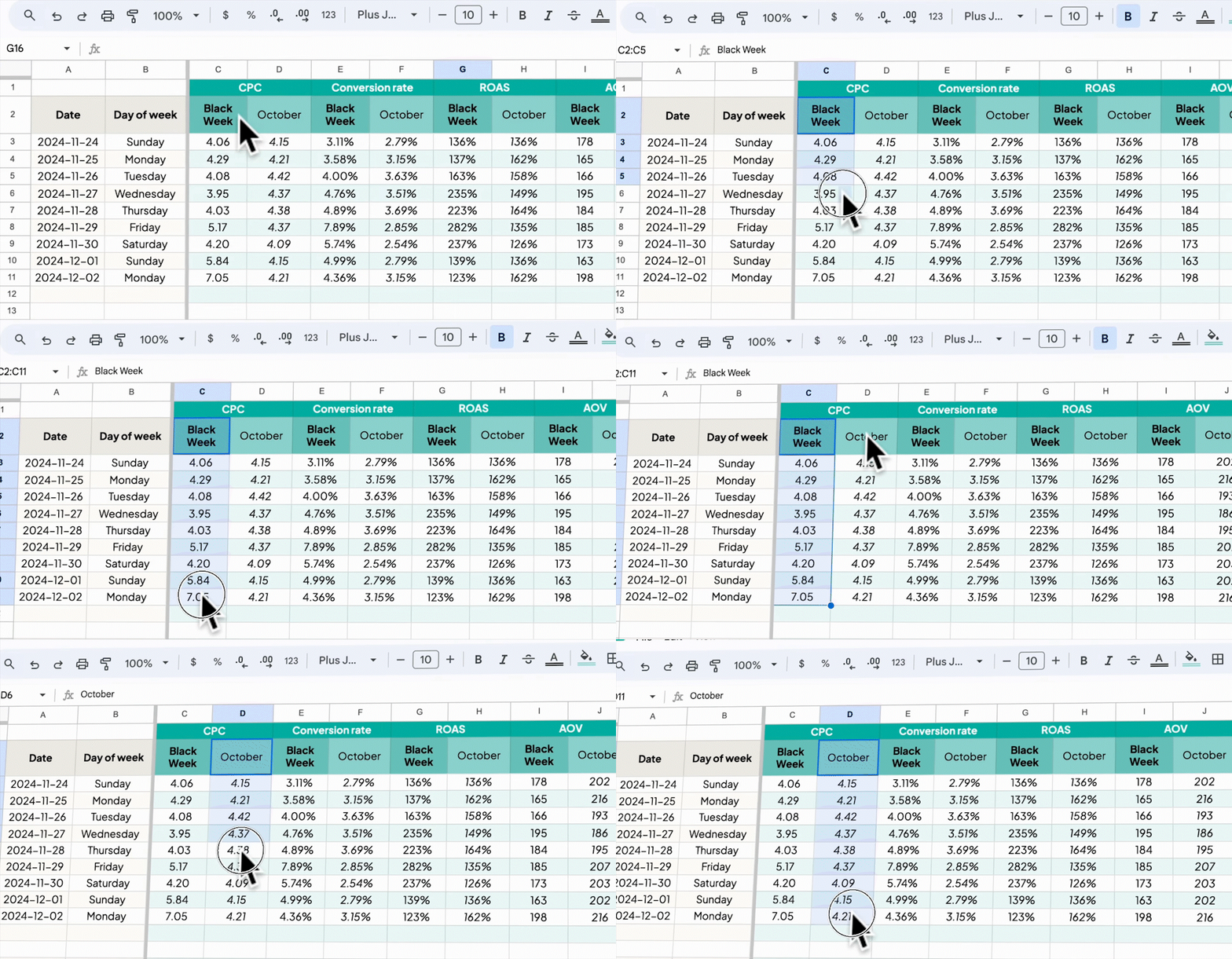
We created a script and an analyzer sheet that pulls data from last year’s Black Week and compares it to a normal baseline period (in this case, October). The sheet you get when you download the script has a full guide on how to set it up, so I won’t go into the technical details here.
The analyzer compares your CPC, conversion rate, ROAS, and AOV for each day of Black Week against a typical day in October. It then calculates what the bid increase was last year, what the SBA *should* have been based on the change in conversion rate, and finally, what the optimal SBA is when factoring in your actual ROAS performance against your target.
The logic is simple: if the ROAS you hit on a given day was lower than your target, you were overpaying, and you need a lower CPC. If your ROAS was higher than your target, you left money on the table and should have bid higher.
Real-World Examples: Two Opposing Black Friday Scenarios
Looking at the data is one thing; turning it into a plan is another. Here are two completely different accounts that show how this works in practice.
Case A: The Under-Bidding Problem
The first thing that jumped out on this account was that our ROAS was much higher than target on Wednesday, Thursday, Friday, and Saturday. This might sound good, but it’s a classic sign of under-bidding.
Here’s why: our CPCs didn’t increase nearly enough. On Black Friday itself, our conversion rate went from a baseline of 2.85% to 7.89% (a 3x increase), but we only increased our CPCs by 25%. That wasn’t enough. We missed out on a massive amount of volume.
The other major mistake is clear in the data: our CPCs kept increasing *after* Black Friday. We ended up with a higher CPC on the following Monday than we had on Black Friday itself. That’s a no-go. It means Smart Bidding saw the high conversion rates and kept pushing spend even after the demand was gone.
So, here is our plan for this year based on the analyzer’s output:
- Tuesday: CVR starts to climb. We’ll start with a 20% SBA.
- Wednesday: The analyzer suggests 42%, but last year’s low CPC skewed that. I’ll be more careful and set it to 30%.
- Thursday: Similar performance to Wednesday, so we’ll stick with 30%.
- Friday: This is where it skyrockets. The analyzer recommends 60%. I’ll plan for 60%, but in practice, I’ll likely start the day at 40% and ramp it up to 60% as the day progresses.
- Saturday/Sunday: Performance stays strong, but AOV dropped last year. I’ll be a bit more careful and bring it down to 20%.
This plan creates a much healthier CPC curve, with a proper spike on Friday and no overspending hangover on Monday.
Case B: The Overspending Frenzy
This account was the exact opposite scenario. And yes, this was one I managed. On Black Friday, our target was 600% ROAS, and we hit 427%. Not good. We got way too excited alongside the client and were massively overspending.
The root cause? We went into Black Week with a ROAS target that was too high. This meant our initial CPCs were too low. On day one of the sale, we saw a ton of headroom and a great blended ROAS, so we told the system “let’s go, let’s go, let’s go.” Our CPCs jumped by 40-60% from one day to the next when it should have been a much more gradual increase. It was a classic overreaction.
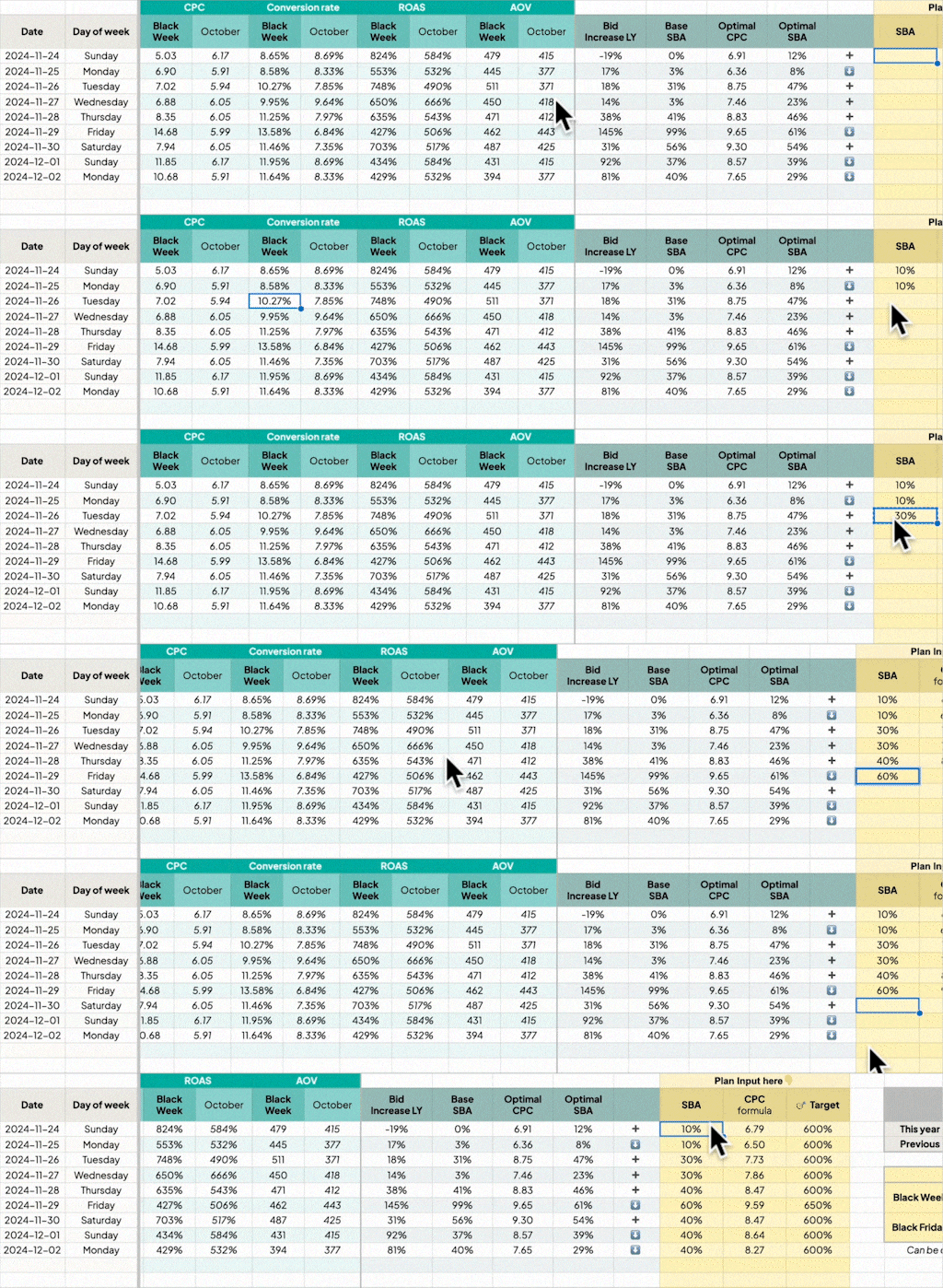
Our plan for this year is much more conservative and controlled:
- Sunday/Monday: CVR is close to baseline, so we’ll start with a modest 10% SBA.
- Tuesday: CVR starts to pick up. The analyzer suggests 47%, but I know we’re coming in with a healthier starting CPC this year, so I’ll set it to 30%.
- Wednesday: Similar CVRs to Tuesday, so we’ll hold at 30%.
- Thursday: CVR climbs again. We’ll increase to 40%.
- Friday: We’ll set this to 60%, again, likely starting lower and increasing through the day.
- Saturday/Sunday/Monday: CVR remains high. I’ll bring the SBA back down to Thursday’s level of 40% to maintain steady performance without overspending.
A small note: these numbers are from European accounts. Cyber Monday is much stronger in the US, so your approach may differ.
Don’t Forget the Hourly View: A Black Friday Dealbreaker
Once you have your daily plan, you’re not done. I ran out of time to build hourly analysis into the script, but you absolutely must go into your account and review the hourly changes from last year.
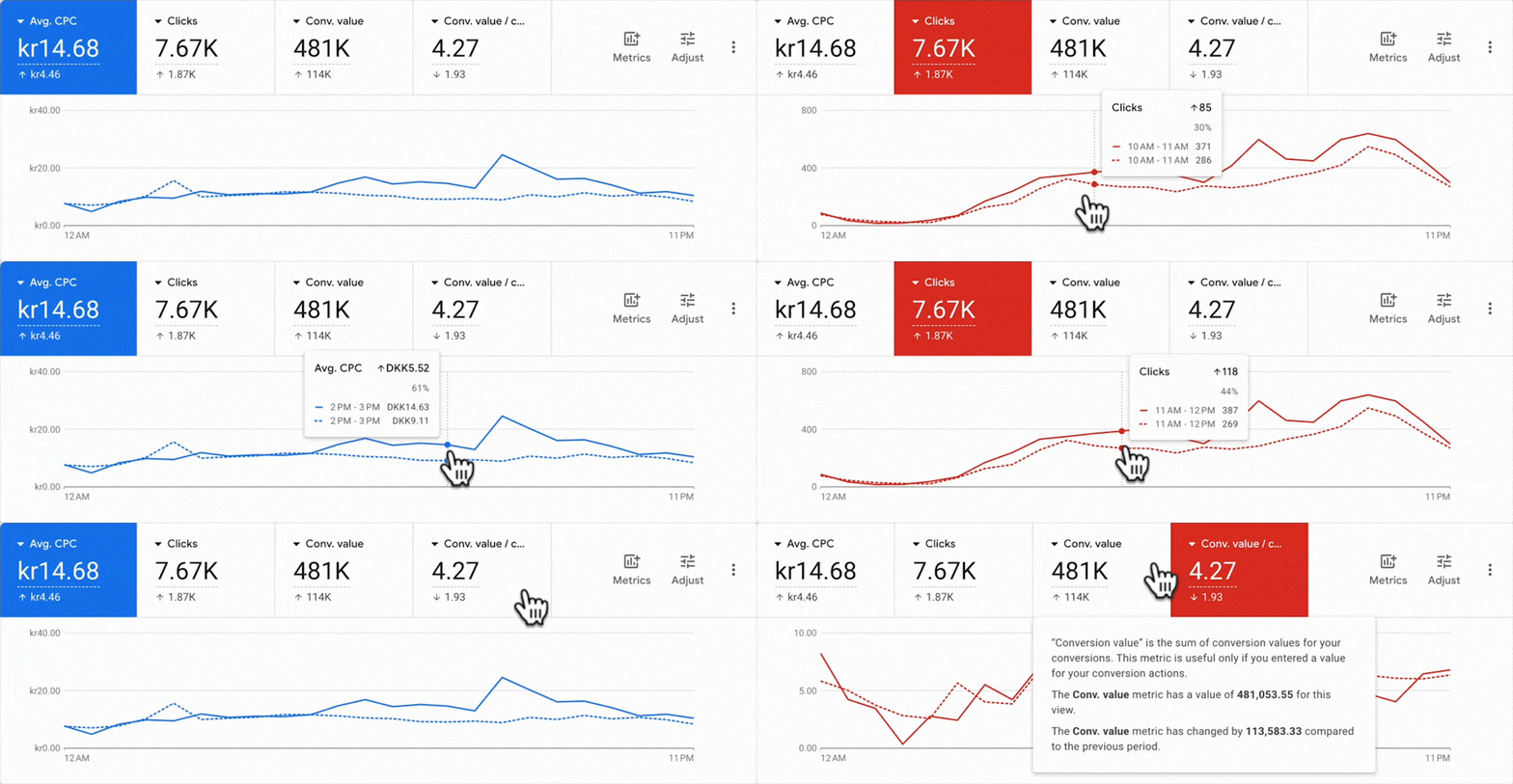
In Case B (the overspending account), the hourly chart showed exactly when we panicked. CPCs were steady in the morning, then we decided we weren’t getting enough clicks and “whacked it up.” Clicks increased, but ROAS took a nosedive. The learning for this year is crystal clear: no matter how excited we get, we cannot exceed a certain CPC threshold. It’s just stupid.
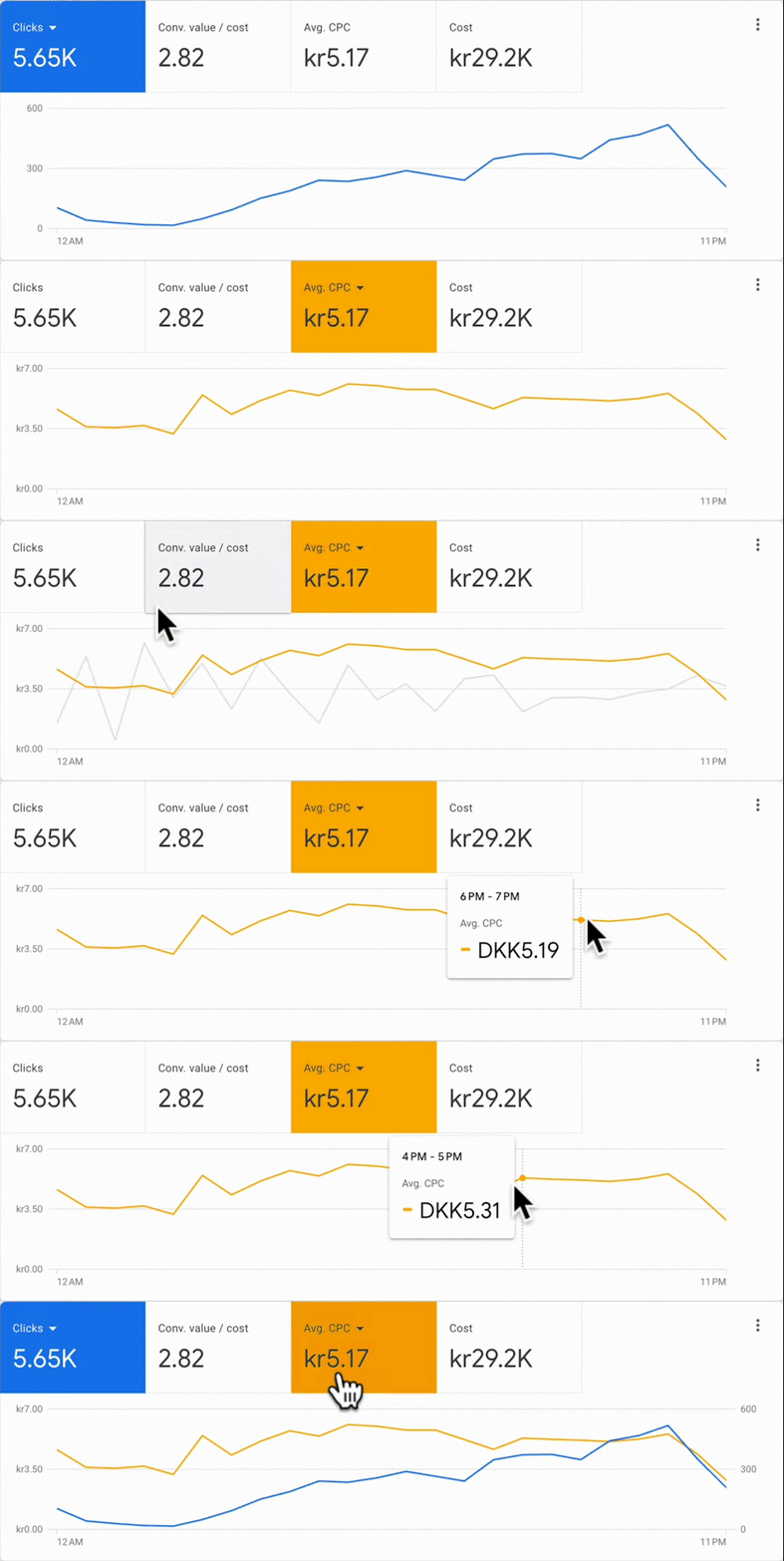
In another account we analyzed (one we didn’t run last year), we saw the opposite mistake. Their CPC stayed flat all day on Black Friday and even decreased in the evening. They didn’t decrease their SBA; what likely happened is that their competitors surpassed them. As you fall down the ad rankings, your CPC goes down because the advertiser below you is bidding less. They simply didn’t keep up with the demand and missed out on a ton of volume.
Your Black Friday Bidding Playbook
To summarize, here is exactly what you need to do to stop guessing and start executing a data-driven strategy.
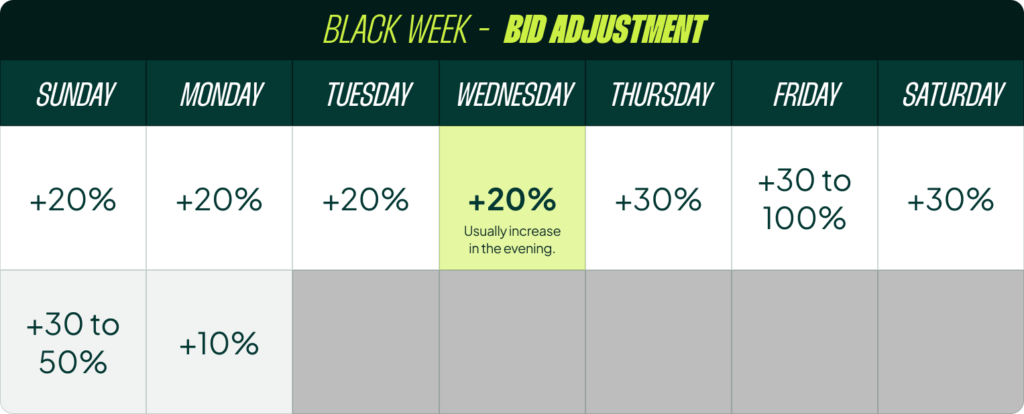
Before Black Week:
- Open up your max bid limits so Smart Bidding can explore.
- Lower your ROAS targets by 10-20% going into the period.
- Remove budget constraints, especially for PMax campaigns.
- Run the script, get the data, and create a daily SBA plan for this year.
During Black Week:
- Avoid increasing your ROAS targets unless you are desperately missing them.
- Set your SBAs according to your plan and adjust them based on live data.
- Use your overall revenue versus your Google Ads spend as your source of truth; you can’t rely on real-time Google Ads data.
You can download the script below for free. Run the analysis, build your plan, and have a great Black Week.
[TL;DR]
- Stop guessing your Black Friday bids. Use last year’s data on CPC, CVR, and ROAS to create a precise daily plan for your Seasonal Bid Adjustments (SBAs).
- Before Black Week, you must open up max bid limits, lower ROAS targets by 10-20%, and remove all budget caps to allow Smart Bidding to work effectively.
- Analyze last year’s daily performance against a baseline to identify mistakes like under-bidding (high ROAS, not enough volume) or overspending (low ROAS, inflated CPCs).
- Create a day-by-day SBA plan based on the data, increasing bids as conversion rates rise and being careful not to overspend after the peak has passed.
- A daily plan isn’t enough. Review last year’s hourly data to understand when to be aggressive during the day and avoid common mistakes like not increasing bids in the evening.