Dansk
Dansk
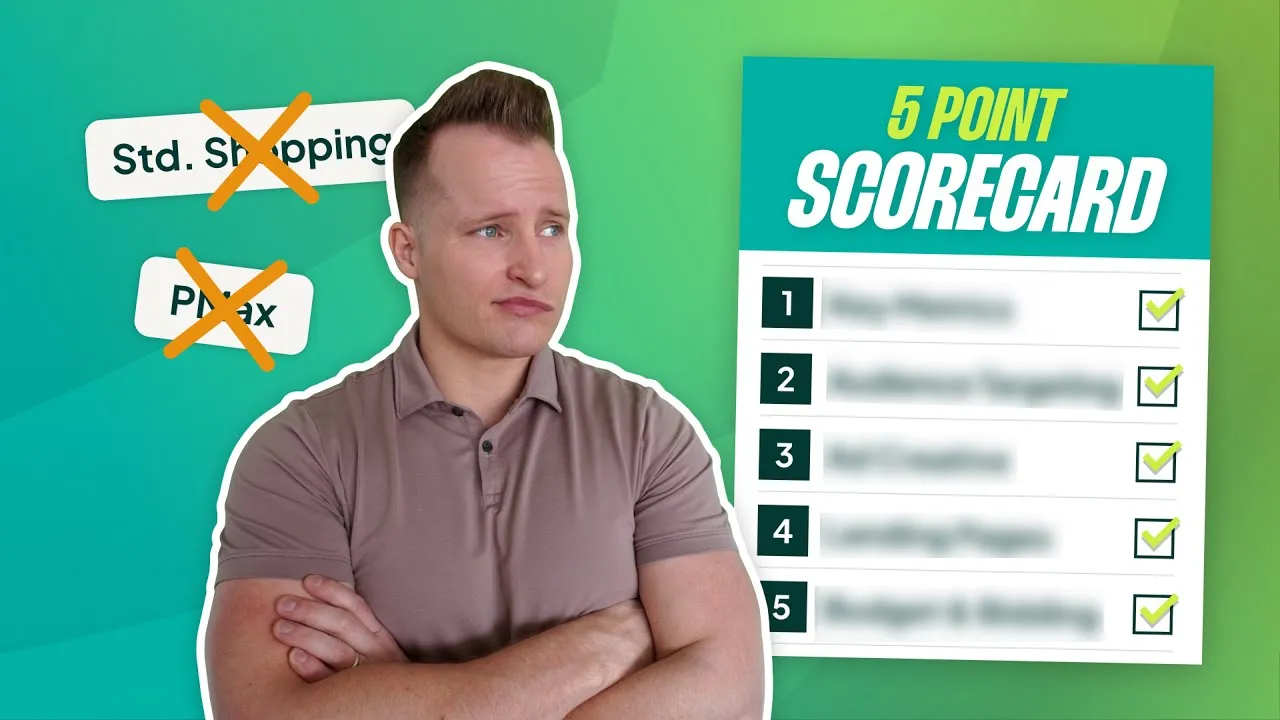
Assessing your Google Ads agency is hard. Experts disagree on tactics all the time. Some love PMax; some hate it. But if you grade your agency on tactics, you’re focusing on the wrong thing.
In my opinion, the tactical side is the least important part of the partnership. I’ve audited dozens of agencies and sat on advisory boards, and I can tell you that all the elite agencies share the same operational framework. This holds true regardless of whether they prefer PMax or Standard Shopping, or how they feel about match types.
This is the five-point scorecard to properly rate your agency. It includes the hard questions they probably don’t want you to ask, including one specific question about business fluency that instantly exposes an agency specialist as a simple order-taker.
Pillar 1: Strategic Leadership (Or Who’s Really in Charge?)
Any client-agency relationship is a dance. The client leads on certain points (usually internal business knowledge), and the agency leads on others (platform expertise). But there should be no discussion about this: the agency should lead 80% of the time on initiatives related to their marketing channel. In this case, Google Ads.
Do they bring new ideas to the table?
Take a look at the last three to six months. Who produced the last five significant strategic ideas, testing concepts, or new initiatives for your Google Ads account? Was it you? Your team? Something you found on LinkedIn? Your agency should be bringing you most of the new ideas. They can’t bring them all, of course, but if they are the experts, they should discover the key opportunities or risks with PMax before you read about it online. Not always, but four out of five times.
Do they get deep into your business?
When was the last time your agency asked you a probing question about a part of your business outside of Google Ads? I’m talking about lifetime value, contribution margin, COGS, inventory levels, logistics, your creative process, or even what the board and CEO are focused on. They need to know these things to be effective. If they don’t ask, they either don’t care or, worse, don’t know that they should care. They have to get to know your business, and the only way to prove it is by asking the right questions.
Are they stagnant?
This is the hardest one to evaluate. Are they still pushing advice that was great in 2020 but is outdated today? Part of being good at Google Ads is knowing which foundational principles still work and which shiny new toys to avoid. I still push some ideas from 2020, but for other things, it would be a huge mistake. While it’s tough for you to judge, it’s a critical point to consider.
Pillar 2: The Logic Test (Do Their Actions Match Their Words?)
This is a simple but deep test. When you review the account and ask them why something was done, is that logic applied consistently across all relevant campaigns? People can have different opinions, but they must be consistent in their application.
For instance, if somebody tells me their core strategy is to split exact and phrase match into separate ad groups to write different ads (an idiotic strategy by today’s standards, by the way), that’s one thing. But they better actually be writing different ads. If they say A, they must also do B.
Do they flip-flop on major strategies?
Some agencies switch between major campaign types without a clear rationale. In 2022, it was “PMax is the best thing since sliced bread, Standard Shopping is dead.” Now, they might be pushing Standard Shopping again. If they flip-flop like this, it’s a sign they have no core convictions. They’re just pushing whatever is new because it’s an easy way to look busy.
The truth is, PMax works in certain scenarios and it’s a horrible decision in others. An expert knows when to use which tool. An amateur throws spaghetti at the wall to see what sticks.
The Google Beta Deck Fallacy
Do they present every new Google beta or feature as a magic bullet? Are they proud to be a “frontrunner” on every new thing Google releases? A good agency discerns. They figure out which betas are actually applicable to your business and apply them only when it fits the overarching strategy they’ve already set.
Pillar 3: Accountability (The “Black Box” Dealbreaker)
One of the biggest red flags I see is the use of the term “black box.” Yes, several parts of Google Ads are a black box these days. That doesn’t mean we can’t learn how it behaves, explain what happens, and take action to work within its constraints.
Explaining performance: Clear answers or lazy excuses?
When performance changes and you ask why, do you get an insightful, data-based answer? Or do they blame external factors and use lazy excuses like “it’s a black box,” “it’s the algorithm,” or “we’re in a learning period”? All of that is mostly BS. There might be a partial truth to it, but the real truth is they don’t know what they’re doing and are trying to hide it.
Do they own their mistakes?
We all make mistakes. Not all the time, but they happen. Just last week, I could have sworn I checked a client’s audience data syncs. Embarrassingly enough, it was a Google rep who pointed out they hadn’t been updated in six months. It was a miss on my part. But I have enough confidence to admit it, fix it, and move on. Does your agency have the confidence to own its mistakes? Or do they deflect and make excuses?
Pillar 4: Processes & Tools (Partner vs. Platform Jockey)
Most agencies are good at the platform. They know which buttons to click in Google Ads. In 2024, that’s just table stakes. That’s enough to get you in the door. The real question is whether they have built an infrastructure that supports your specific business model.
If they use the same reporting template, meeting structure, and optimization checklist for a B2B SaaS company as they do for your e-commerce brand, they aren’t a strategic partner. They’re just button-pushers.
Reporting: Generic PDFs or P&L-ready insights?
Look at their standard report. Is it a generic PDF that looks like it came from a template? Or does it contain the metrics that matter to your P&L, like contribution margin, new vs. returning customers, or blended ROAS? If you showed their report to your CFO, would they appreciate it, or would it look like meaningless mumbo jumbo? If their reporting doesn’t align with your internal finance meetings, they’re not the right e-commerce partner.
Have they built anything custom for your business type?
This doesn’t have to be complex software. It could be a specific Google Sheet for analysis, a script that monitors conversion lag, or one that flags Merchant Center disapprovals based on traffic levels. It also includes deep knowledge of the tools your business type needs, like feed management for e-commerce. At Savvy, we’re power users of Channable, but ask us about custom call tracking, and we’re dead in the water. We know our specialty. If your agency hasn’t built anything custom, they likely lack deep expertise in your specific niche.
Pillar 5: The Courage to Disagree (Are They a Partner or an Order-Taker?)
Most agencies talk a big game about being your “partner.” It’s why we’ve persisted in using the term “true partner” on our site—because the word has lost its meaning. A true partner dares to say no. Partners disagree. Partners call each other out when they’re wrong (tactfully, of course).
The “Yes Man” Test
If you suggest a bad idea, do they implement it immediately or do they challenge you with data? If they agree with everything you say, they are just an order-taker. You pay an agency for their expertise, not for an extra pair of hands to do your bidding.
Business Fluency
This is the ultimate test. Do they understand your business constraints beyond the ad account? Do they know your promotional calendar, your inventory levels, and how you report to your board? If they don’t understand why you need specific results, they can’t actually help you get them.
Can they actually convince you?
I had a meeting with a potential client who said her agency had been trying to convince her for a year to stop using CSS affiliates for Shopping, but she just wasn’t convinced. She didn’t understand their reasoning. In five minutes, I used our data to show her how we could phase out her dependence on them in three months, and she agreed. If your agency can’t disagree with you and subsequently convince you of their position with a strong argument, they’re not heavyweights.
The 10-Point Rapid-Fire Gut Check
If you’re still unsure, run through this quick tactical checklist. The answers will be very revealing.
- 1. Campaign Naming: Have they updated the naming structure for all campaigns, or did they just leave the previous agency’s names in place? (The latter is just lazy).
- 2. Brand Search: Do they include brand searches as part of their core performance calculation? (This is a number one red flag; they shouldn’t).
- 3. Brand Awareness: Do they claim to generate “brand awareness” on YouTube or Display by spending just 5% of your total budget? (If so, they have no idea how brand awareness works).
- 4. Senior Leadership: Did they sell you on a senior partnership, but you haven’t heard from that senior person in months? (They lied to you).
- 5. Margin Knowledge: Does your agency understand the difference between your gross margin and contribution margin? (It’s a simple yes or no).
- 6. Performance Dips: When performance dips, do you get a clear, actionable plan to fix it, or just “black box” excuses?
- 7. P&L Metrics: Does the agency report on metrics that directly impact your P&L (blended ROAS, MER, contribution margin, new customers)?
- 8. CEO-Ready: Do you feel confident enough for your agency to present their strategy directly to your CEO or board? (This is a big one).
- 9. Pushback: Has the agency ever pushed back on one of your ideas with a data-supported argument? (This is a good thing).
- 10. PMax Transparency: Has your agency shown you exactly how much spend goes to Display vs. Search vs. Shopping vs. Video within your PMax campaigns? (If not, that’s a problem).
This framework is designed to help you identify the real strengths and weaknesses in your agency partnership. A great agency will be a constructive, sometimes argumentative, true partner. If you run through this list and realize your agency is more of an order-taker, you don’t have to fire them immediately. But now you know how to challenge them to be better.
[TL;DR]
- Strategic Leadership: Elite agencies lead with proactive ideas and deep business questions, they don’t just follow orders.
- Logical Consistency: Their actions must align with their stated strategy; they don’t flip-flop or chase every new Google beta.
- Accountability: They provide clear, data-driven answers for performance changes and own their mistakes without hiding behind “black box” excuses.
- Custom Processes: They build processes, reports, and tools tailored to your business model, proving they’re more than just platform generalists.
- Courage to Disagree: A true partner has the business fluency and confidence to challenge your ideas with data to achieve better results.