I see it constantly. While we’ve embraced new approaches for Performance Max and Demand Gen, Search campaigns in most accounts are still built on a foundation of over-segmentation that reminds me of the early 2010s. It’s a relic from a different era, and it’s hurting performance today.
These complex structures were born from a need for manual control, but in the age of Smart Bidding and Responsive Search Ads, they’ve become a liability. The old ways of thinking are actively working against the way Google’s algorithms operate now. So, let’s talk about the new rulebook we’ve created for making Search work for you, specifically for e-commerce.
Go Beyond the Article
Why the Video is Better:
- See real examples from actual client accounts
- Get deeper insights that can’t fit in written format
- Learn advanced strategies for complex situations
Why Your Search Campaign Structure is Stuck in 2020
Before we build the new, let’s tear down the old. You’ve probably heard of these structures:
- SCAGs (Single Keyword Ad Groups): These get way too messy. They worked great back in the day because we could set a mobile bid adjustment per keyword. That was the entire point. Today, that level of manual control is gone, and SCAGs just create an organizational nightmare for ad testing.
- STAGs (Single Theme Ad Groups): A horrible name, and in my experience, it almost always results in an irrelevant relationship between the keyword and the ad. Maybe it has a place in lead gen, but for e-commerce, it’s a non-starter.
- SLAGs (Single Landing Page Ad Groups): These are completely useless from an e-commerce standpoint. You end up with keywords that could fit in multiple places, which means you don’t have a real framework, just a set of loose interpretations.
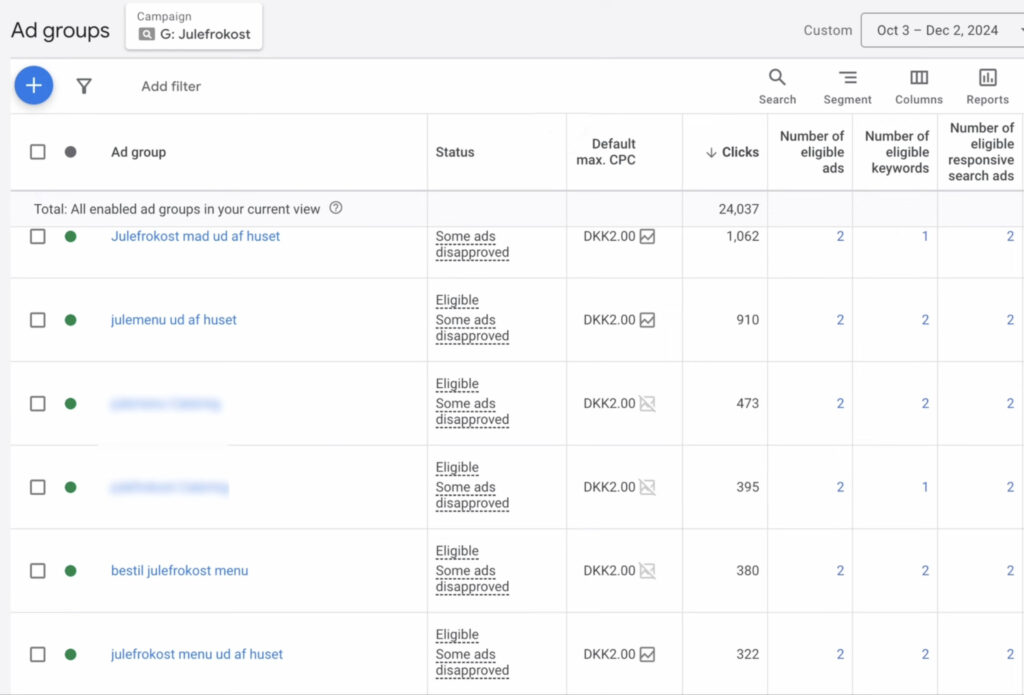
Even Google’s own concept, Hagakure (a stupid name nobody understands), is fundamentally where we’ve ended up, but the label is just a marketing ploy. The core issue with all the old methods is the same. Just look at this example account I came across recently.
The ad groups were for “Christmas lunch,” “food for Christmas lunch,” “Christmas lunch menu,” and “Christmas lunch order.” They are all functionally identical. The ads are not meaningfully different. This created about 150 different ad groups to manage, and because of the way keyword variant matching works today, the same search term could trigger an ad from any of those ad groups. You have no real control.
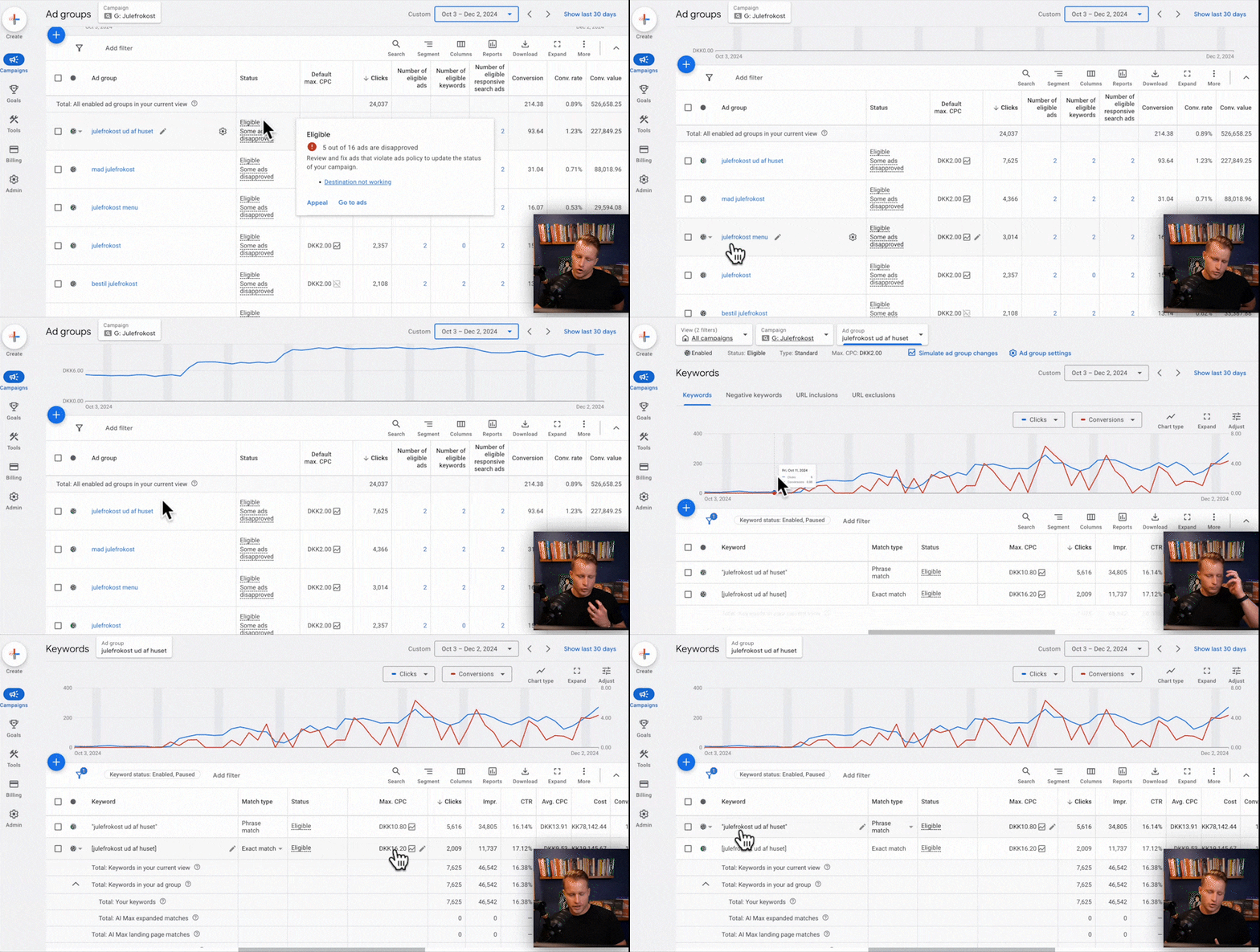
The Real Problem: Over-Segmenting Confuses Smart Bidding
This brings me to the main point. When I open accounts structured like the one above, the fundamental flaw is that Smart Bidding can enter the same auction from multiple places in the account.
It gets confused. Think back to when we used to manage bids manually. If you increased bids in one ad group, decreased them in another, and then fiddled with a third, all while the same search term could trigger any of them, it was chaos. The same confusion applies to Smart Bidding today.
We have to limit the number of places Smart Bidding can enter an auction for a given search query. Our primary goal is to remove this confusion and give the algorithm a clear path.
The New Rulebook for High-Performing Search Campaigns
To fix this, I have five simple rules we implement at SavvyRevenue. This is routinely how we get better results with Search than Shopping, because most agencies simply don’t know how to do Search anymore.
Rule 1: Keep It Tight
Use as few keywords, as few ads, and as few ad groups as you can get away with. The entire framework revolves around a simple, unbreakable chain of relevance:
Search Term -> Keyword -> Ad -> Landing Page
As long as that relationship holds true, you have a solid foundation. Your primary goal is to limit the number of auction entry points. Your secondary goal is to concentrate traffic and data into as few Responsive Search Ads (RSAs) as possible. The fewer RSAs you have, the faster Google’s algorithm can learn which headline combinations work best.
When creating a new ad group, ask yourself one question: “Will I write a meaningfully different ad for this keyword?”

For example, “Nike running shoes” is a great ad group. But keywords like “men’s Nike running shoes,” “women’s Nike running shoes,” or “Nike Air Zoom running shoes” would not go in that ad group. Why? Because they demand a different ad and a different landing page to maintain that tight relevance.

On the other hand, keywords like “long distance running shoes,” “marathon training shoes,” and “race day running shoes” can all happily live in one “Marathon Running Shoes” ad group because they point to the same user intent, the same ad, and the same landing page.

Rule 2: Skip Endless Keyword Variations
We all love to hate on Google’s keyword matching. But instead of complaining, we should be asking, “How can I take advantage of it?”
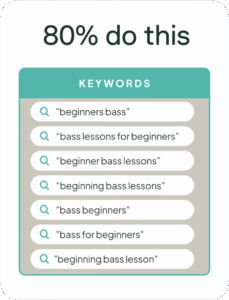
Lean into Google’s machine learning. You want to lower the number of keywords necessary. The 2020 mindset was to add every possible variation: “bass lessons for beginners,” “beginner bass lessons,” “beginning bass lessons,” and so on, in phrase, exact, and (if you read some crazy LinkedIn post) broad match.
You wonder why Smart Bidding has a tough time? That’s why.
For one client, we replaced a long list of variations with just two keywords: “bass for beginners” and “bass guitar for beginners.” The result was 3x more volume at a 3x lower cost per conversion. Less is more.
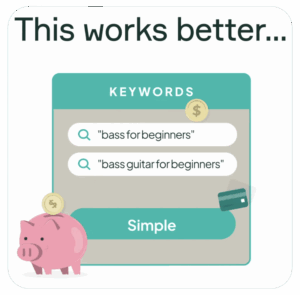
Rule 3: Phrase and Exact Match Still Work Just Fine
So many people think you either have to go all-in on broad match or stick only to exact match. I just don’t see it. For e-commerce, a combination of phrase and exact is the sweet spot.

- Exact Match: This is your control group. What you see is what you get, and it tells you if your core targeting is on point.
- Phrase Match: This is your discovery tool. It provides the extra cover to capture variations and new search patterns. It’s a good thing.
Broad match is a tool for scale, something you add only when you have the profit margin and need more volume. Technically, you could just run phrase match, but I like having both because it allows me to quickly see if the traffic is coming from my core exact match terms or from looser variations in phrase match.
Rule 4: Write Meaningful Headlines (Or Don’t Bother)
Once you’ve selected your keyword, you only have two levers to pull for better performance: your bid and your ad. You should be obsessive about your ad.
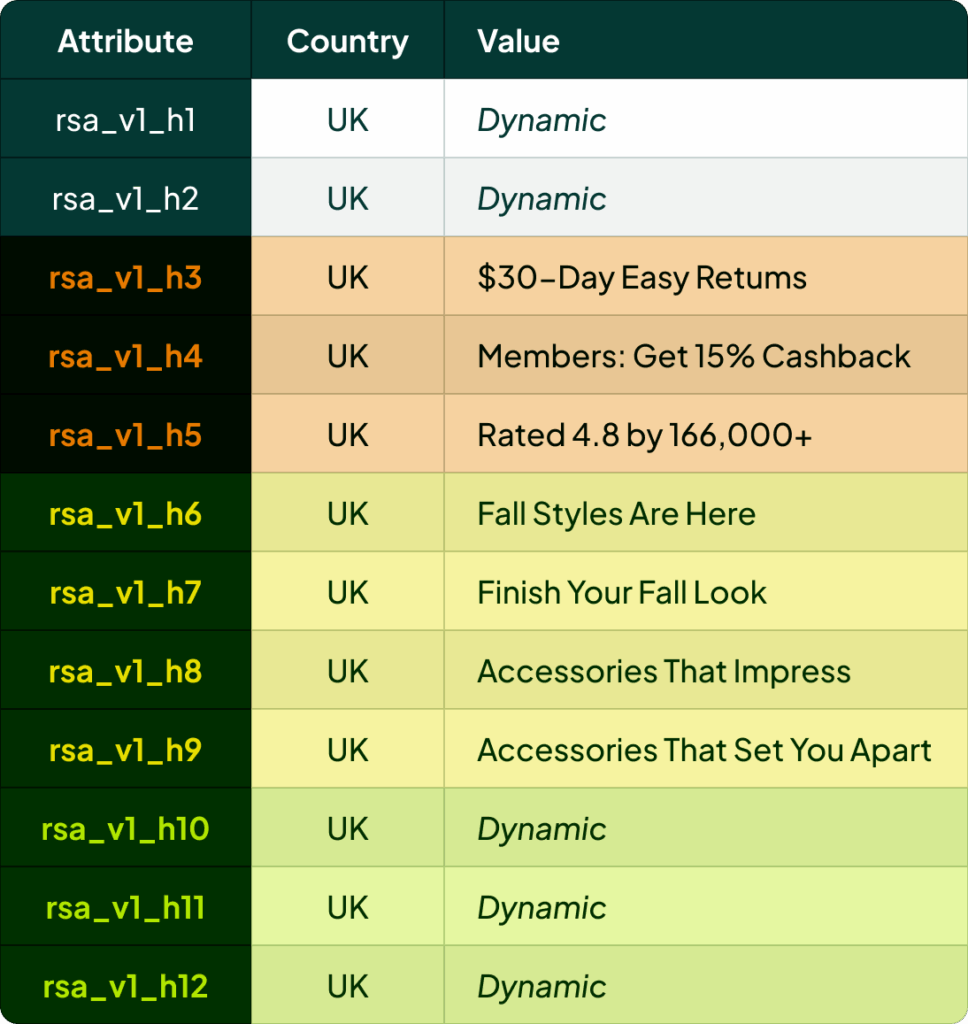
We use a structured approach to RSAs, assigning specific angles to headline slots. It’s rare that we use all 15, but we always start with a plan.
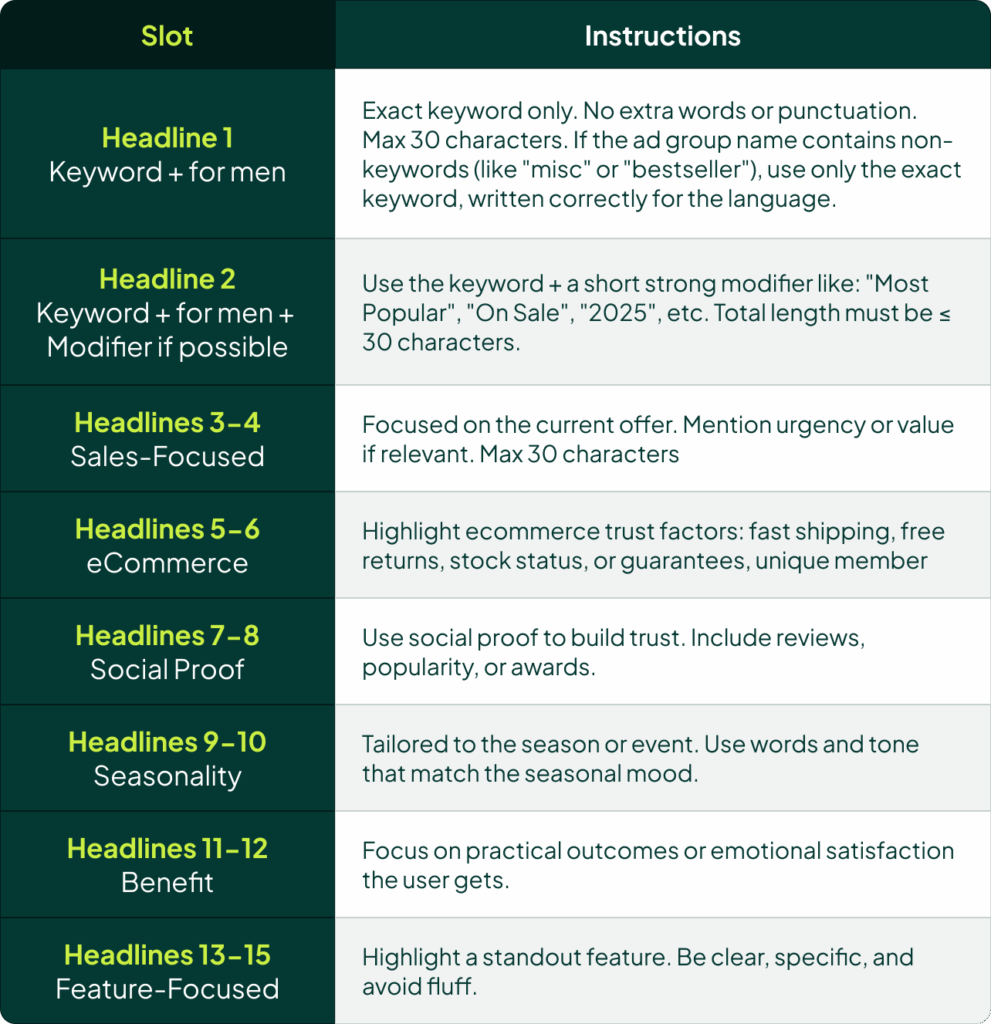
This structured approach consistently produces better ads than just throwing 15 random ideas at the wall.
Rule 5: Feed the Machine with First-Party Data
Keep this simple. Send four audiences to Google as signals for Smart Bidding:
- Website Visitors
- All Converters
- Email Subscribers
- Email Customers
With very few exceptions, all other audiences are irrelevant for e-commerce Search campaigns. Unless you have the volume to write different ads for different audiences (which you probably don’t), just give Google these core signals and let it work.
What This Looks Like in a Real Account
So how does this all come together? Our core search setup for a new e-commerce account is usually just three campaigns:
- Categories: Targeting generic category keywords (e.g., “bracelets”).
- Category + Brand: Targeting category keywords with brand names (e.g., “arena swimwear”).
- Dynamic Search Ads (DSA): To catch everything else.
That’s it. 80-90% of the initial volume comes from just these three campaigns. We can add more later (like campaigns based on color, material, or niche filters), but the foundation is simple.
In one client’s account selling jewelry, we have campaigns for their main categories like “Bracelets,” “Apparel,” and “Bags.” Inside the “Bracelets” campaign, we have ad groups for the core keyword (“bracelets”) and for filters like color and material. We use Dynamic Keyword Insertion in the ads, so we don’t need a separate ad group for every minor variation. It’s clean, simple, and follows the rule: search term matches keyword, matches ad, matches landing page.
The structure is tight, consolidated, and gives Smart Bidding clear, concentrated data to work with. That’s how you win with Search today.
[TL;DR]
- Stop using outdated, over-segmented campaign structures like SCAGs. They were designed for manual bidding and confuse modern Smart Bidding algorithms.
- The core problem is creating too many entry points into the same auction for the same search query, which confuses the algorithm and dilutes performance data.
- Your new goal is to consolidate. Use as few keywords, ads, and ad groups as possible while maintaining a tight alignment between the search term, keyword, ad, and landing page.
- Leverage Google’s keyword matching with a simple combination of phrase and exact match keywords. Forget adding endless minor variations.
- Focus your energy on writing better, structured Responsive Search Ads. This and your bidding strategy are the only two levers you can pull to improve performance.