Most of the chatter around Google Ads bidding focuses on Target CPA vs. Maximize Conversions. But for e-commerce, that’s the wrong conversation. The real debate, the one that’s almost never had, is Target ROAS vs. Maximize Conversion Value.
On one hand, you have Maximize Conversion Value. You give Smart Bidding a budget, and it tries to get the highest possible conversion value within that budget. On the other, you have Target ROAS, where you give it a budget and a ROAS target it has to adhere to. It’s this second restraint that causes all the confusion.

Some people will tell you Maximize Conversion Value is the best way to scale because it lets Smart Bidding spend without constraints. It sounds good in theory. But they’re absolutely wrong. In this article, I’m going to show you why Maximize Conversion Value opens up a list of other issues and why adding a smart restraint is actually what unlocks real scale.
Go Beyond the Article
Why the Video is Better:
- See real examples from actual client accounts
- Get deeper insights that can’t fit in written format
- Learn advanced strategies for complex situations
The Fundamental Flaw of Maximize Conversion Value
The core problem with Maximize Conversion Value is that it’s built on a faulty premise: that you should spend the same amount of money every single day. This might work on a platform like Meta, but it goes directly against user behavior on Google.

Searches on Google fluctuate. Demand changes from day to day, week to week, and month to month. Telling Google to spend a fixed amount every day, regardless of how many people are actually searching for your products, makes little sense.
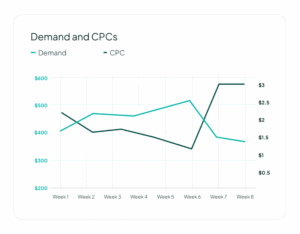
Here’s what happens in practice:
- On low-demand days: When there aren’t enough searches to naturally spend your budget, Smart Bidding has to force it. How? By increasing your CPCs. It starts paying more for the same (or worse) clicks just to hit that arbitrary budget number. Your ROAS plummets because you’re paying more per click while your conversion rate stays the same.
- On high-demand days: When a wave of potential customers hits, you want to ride it. But your fixed budget acts as a ceiling. Google might even lower your bids to stretch the budget through the day, meaning you miss out on a massive amount of profitable volume. Your ROAS might look great, but your total revenue is capped.
In both scenarios, you’re making a compromise. You’re either sacrificing profitability or capping your growth. This is the exact opposite of what we want.
Why Target ROAS is Built for Scaling
Target ROAS flips the logic entirely. It doesn’t obsess over hitting a daily budget. It obsesses over hitting a profitability target. It still maximizes your conversion value, but it does so while adhering to your required ROAS.
It Works With Demand, Not Against It
Target ROAS understands that if a click is profitable, it’s profitable whether there are 1,000 people searching that day or 10,000. If the system knows it can pay 87 cents for a click and consistently hit a 700% ROAS, it will keep paying 87 cents for that click.
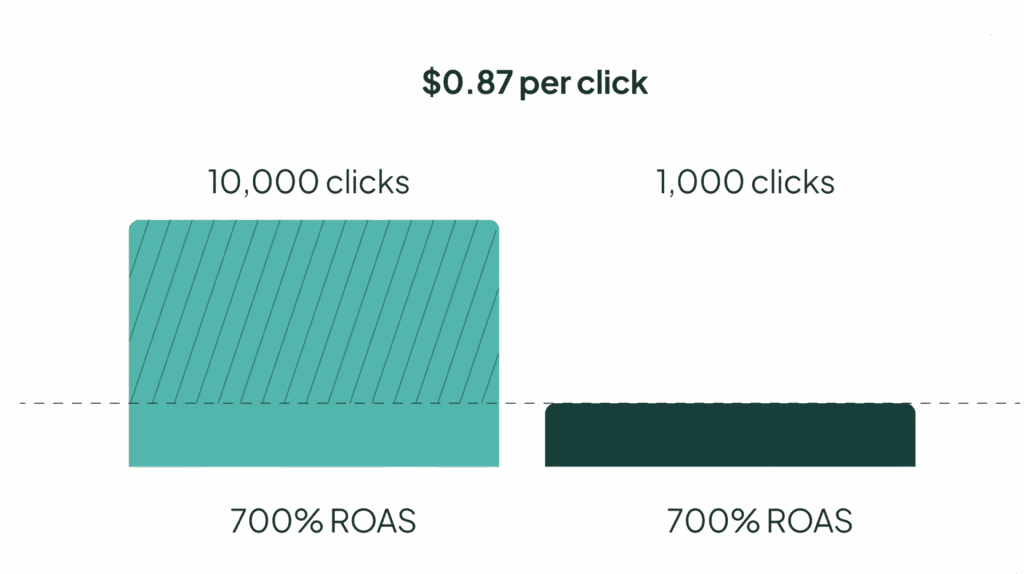
This means we are able to:
- Ride the wave of demand: On days with high search volume, the campaigns can spend more and capture that extra volume because the clicks are still profitable. We don’t hit an artificial budget ceiling.
- Stay protected on quiet days: On days with fewer searches, the campaigns naturally spend less. We avoid the trap of Google inflating our CPCs just to get rid of a budget.
Think of it like a retail store. You wouldn’t tell your manager to stop letting profitable customers in the door just because you hit a daily spending goal for electricity. As long as each customer is profitable, you want as many as possible. Your budget shouldn’t limit your ability to scale with demand.
Profitability Remains Stable as You Scale
The goal isn’t just to spend more; it’s to spend more while maintaining profitability. With Target ROAS, the two are directly linked. As long as you can hit the target, the system is free to scale.

Here’s a look at a real account during a growth period. You can see that as the cost increases, the conversion value (revenue) increases right alongside it.
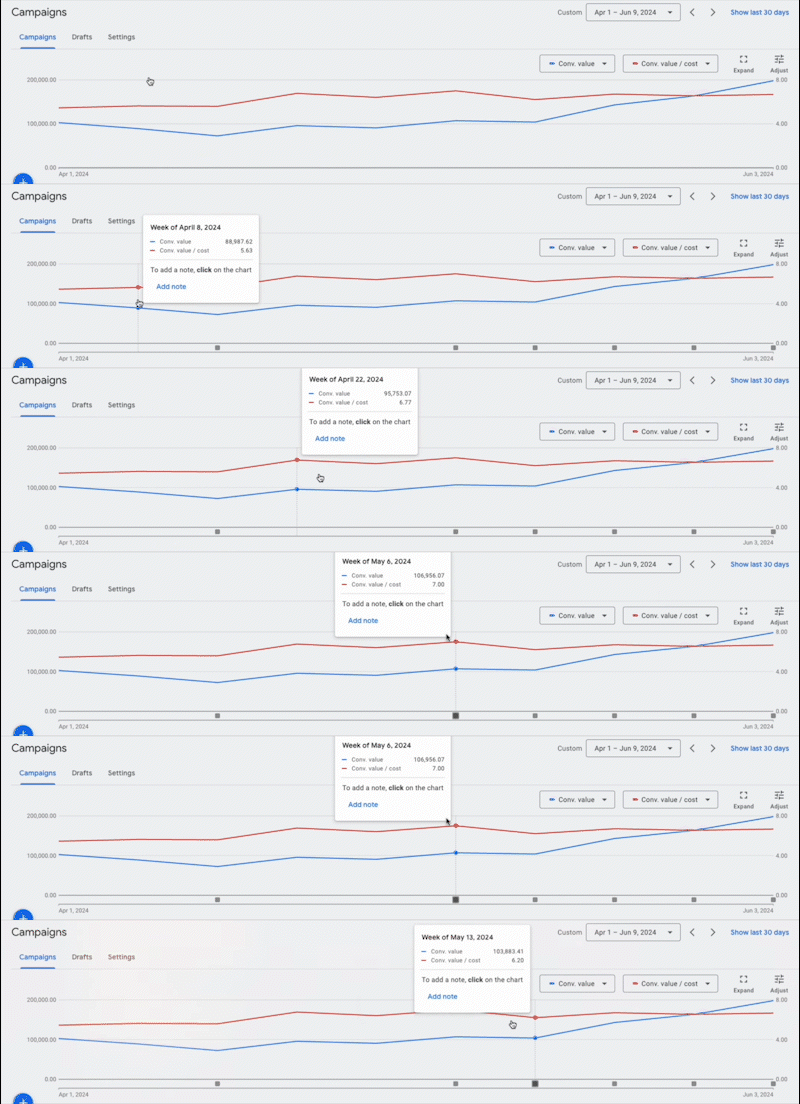
The ROAS stays remarkably stable. We started at a 545% ROAS with $100,000 in revenue and ended with double the revenue at a 667% ROAS. Yes, there are fluctuations week to week (no system is perfect), but the overall trend is clear: growth without sacrificing efficiency. Trying to manually manage budgets on top of this to predict demand would be a nightmare.
How to Get the Most Out of Target ROAS
Simply switching to Target ROAS isn’t enough. To truly make it work, you need to manage it strategically. Here are the three key levers.
1. Set the Right Target (It’s a Business Constraint)
If Target ROAS “doesn’t work” for you, it’s almost always because the target is wrong. This isn’t just a campaign setting; it’s a reflection of your business margins. If you have a 10% margin, you need a 1,000% ROAS just to break even. If your campaigns can’t profitably hit that number, the system won’t bid, and your spend will dry up. In this case, Maximize Conversion Value would spend your money, but it would do so unprofitably. The problem isn’t the bid strategy; it’s the underlying business math.
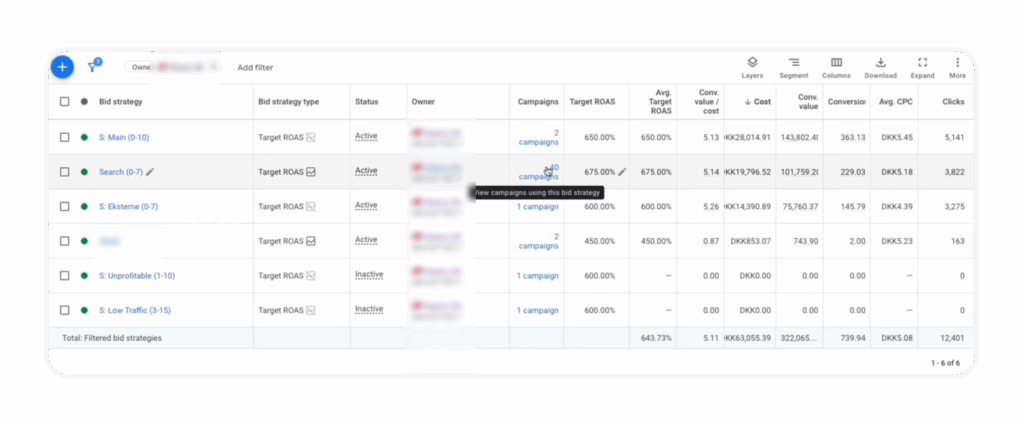
2. Use Portfolio Bid Strategies to Pool Data
I love Portfolio Bid Strategies (they are in the “Tools & Settings” menu). They allow you to group multiple campaigns together under a single bid strategy. In one case, we have 40 search campaigns all lumped together.
The point isn’t just “more data is better.” The key benefit is that a larger data set allows Smart Bidding to react faster to changes in performance. This means less wasted ad spend when things dip and less opportunity cost from not bidding high enough when demand spikes.
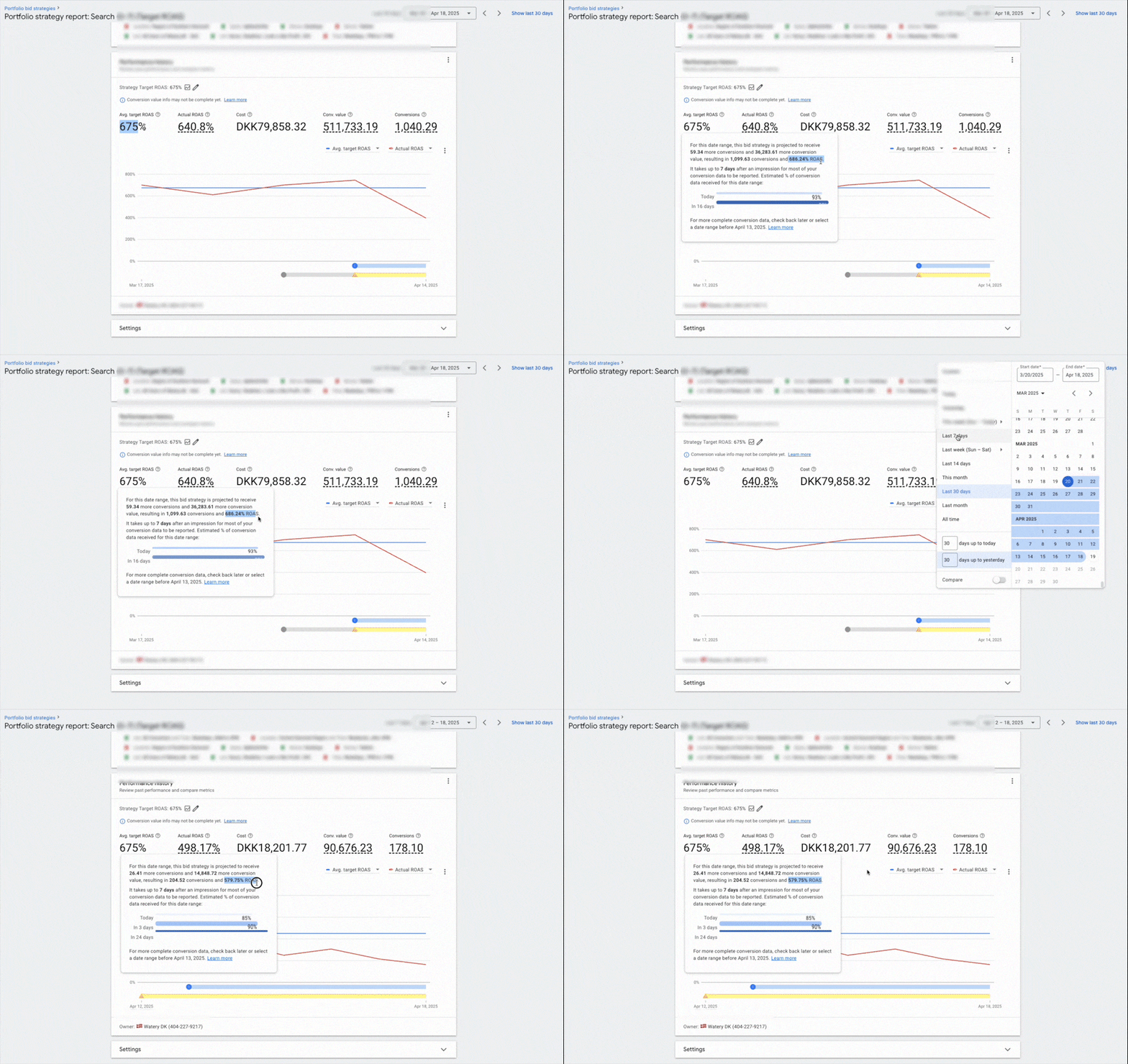
3. Adjust Your Target at Key Times
Your ROAS target shouldn’t be set in stone. It’s a lever you can pull to tell the system what you want.
- Lowering your ROAS target tells Smart Bidding: “Go explore. Find more volume, buy me more traffic.” This is great to do ahead of a peak season to ramp up volume aggressively.
- Increasing your ROAS target tells Smart Bidding: “Tighten up. Become more efficient.”
Even if your annual ROAS goal is stable, making strategic adjustments like this can dramatically improve your results throughout the year.
When Does Maximize Conversion Value Actually Make Sense? (Hint: Not Often)
As with anything, there are exceptions. There are a few, very specific scenarios where Maximize Conversion Value can be a useful tool.
- Your boss is budget-centric. If you work in an organization where accurately spending a fixed monthly budget is more important than spending it efficiently, Maximize Conversion Value is your best bet. Some of you might be thinking, “What? These people exist?” Yep, there are a lot of them.
- Campaigns are struggling to spend. If you’ve lowered your ROAS target and a campaign still won’t spend, switching to Maximize Conversion Value for a short time can force it to start collecting data. Once it has some momentum, you can switch it back to Target ROAS to regain efficiency.
- You need to “reset” the algorithm. If your tracking malfunctioned or your site’s conversion rate tanked temporarily, Google’s algorithm can get stuck. Forcing it to spend with Maximize Conversion Value can be a way to feed it fresh data and reset its learning, especially if you’re not comfortable with manual bidding.
Notice a theme here? These are all temporary fixes or workarounds for specific constraints. They are not a foundation for a scalable growth strategy.
The Bottom Line: Don’t Let Your Budget Cap Your Growth
Trying to predict daily demand on Google is basically impossible. With Maximize Conversion Value, you’re always a step behind, trying to set the perfect budget. This means you’re almost always bidding too high on quiet days or too low on busy days.
Target ROAS allows you to sidestep that entire problem. It lets you ride the wave of demand, scaling up and down automatically, all while protecting your core profitability. It’s the only one of the two that’s truly built for growth.
[TL;DR]
- Maximize Conversion Value is flawed for scaling e-commerce accounts because its fixed budget works against natural fluctuations in search demand.
- On low-demand days, Max Conversion Value overpays (higher CPCs) to spend the budget. On high-demand days, it caps your potential revenue.
- Target ROAS is superior because it focuses on a profitability target, allowing it to spend more on high-demand days and less on low-demand days, effectively “riding the wave.”
- To use Target ROAS effectively, you must set a realistic target based on your margins, use Portfolio Bid Strategies to pool data, and strategically adjust your target to manage volume and efficiency.
- Maximize Conversion Value should only be used in specific, often temporary, situations—not as a primary strategy for growth.