I think that Broad Match will become surplus to requirements in the near future. The reason? AI Max.
If you’ve followed our work, you know I believe Phrase Match is the correct starting point for most e-commerce accounts. For years, the choice has been a frustrating trade-off between control and discovery. Phrase Match gives you control but limits your ability to find new, long-tail search terms. Broad Match is great at discovery but often tanks your ROAS because of the broken connection between what people search for and the generic ad they’re shown.
At Savvy, we’ve historically used Dynamic Search Ads (DSA) as a workaround to get that discovery without immediately resorting to Broad Match. But I think AI Max fundamentally changes this equation. And in this article, I’ll lay out exactly why it’s a better path forward, even if you haven’t seen great results from it yet.
Watch the article as a video
The Core Problem with Broad Match: Reach Without Relevance
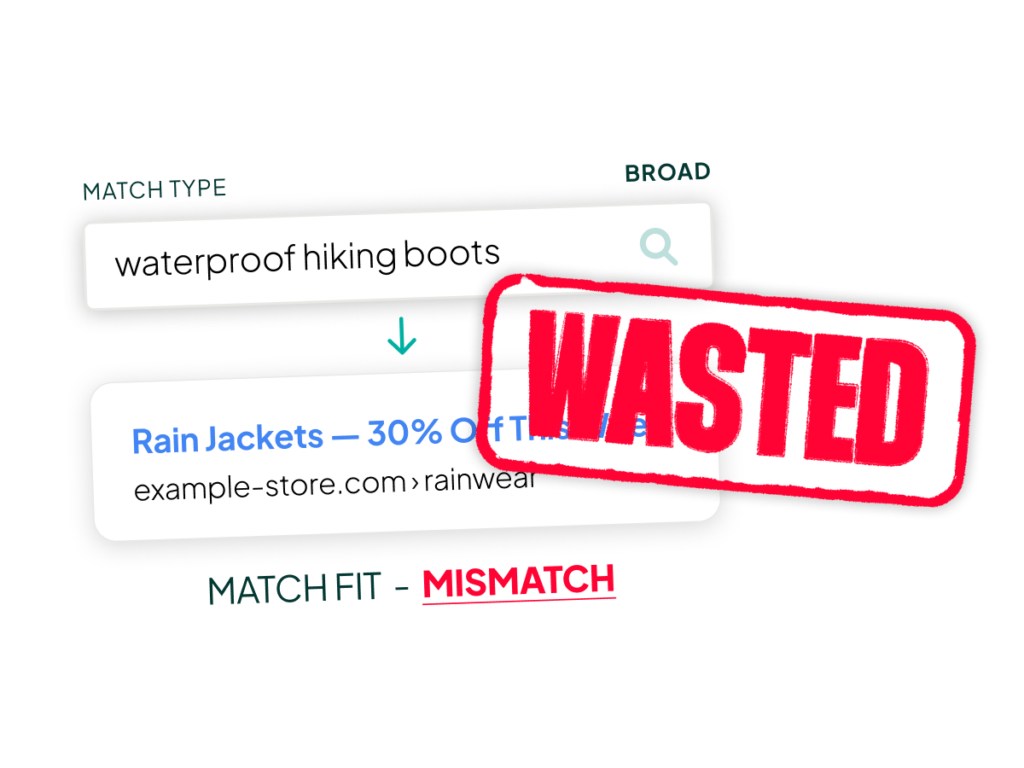
The issue with Broad Match has always been the same. It finds volume, but the quality is questionable. Google finds search terms that are thematically related to your keyword, but the ad the user sees is whatever static ad you wrote for that ad group. There’s often a massive disconnect between the search term and the ad experience.
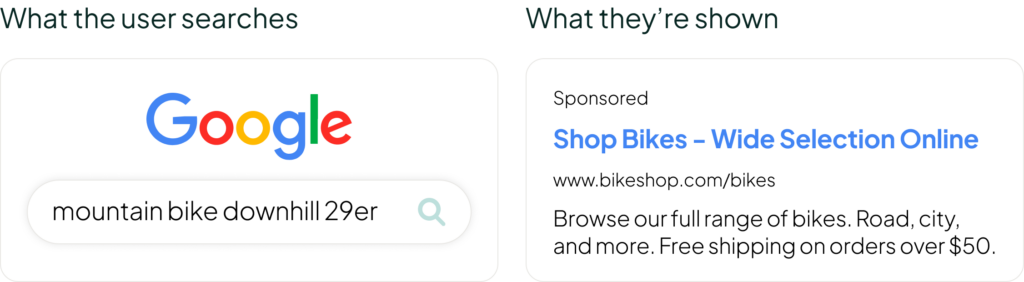
This violates the number one law of Google Ads that’s been true since day one: Search Term intent should match the Ad Theme.
Think of it this way:
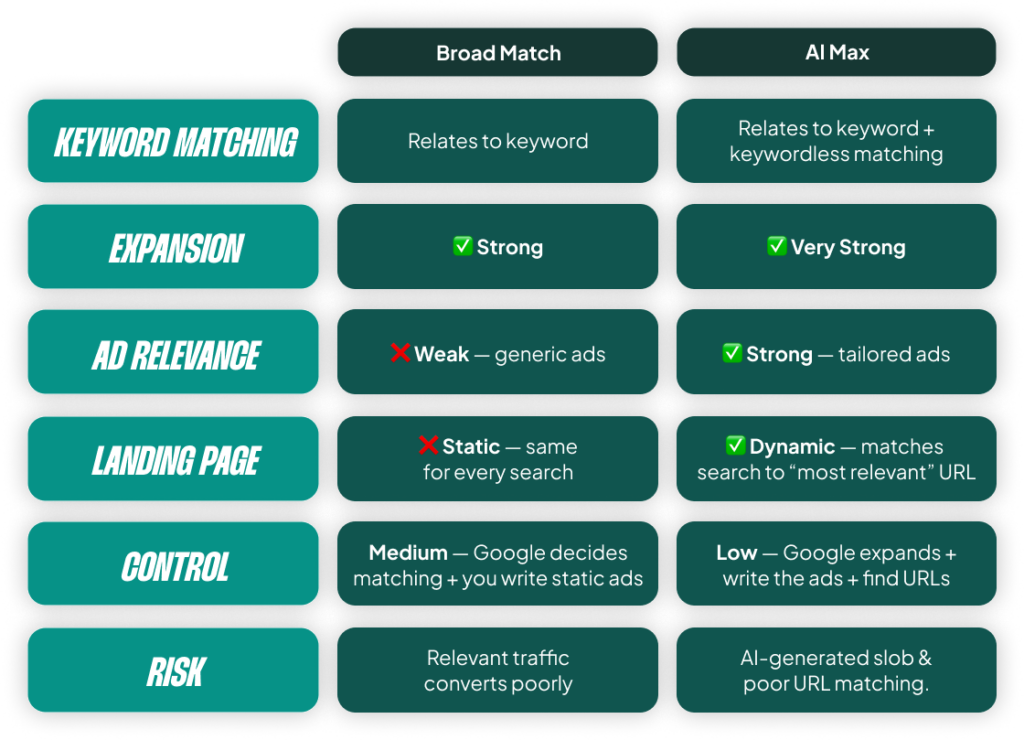
- Broad Match expands where your ads show up.
- AI Max expands where your ads show up and what your ads say.
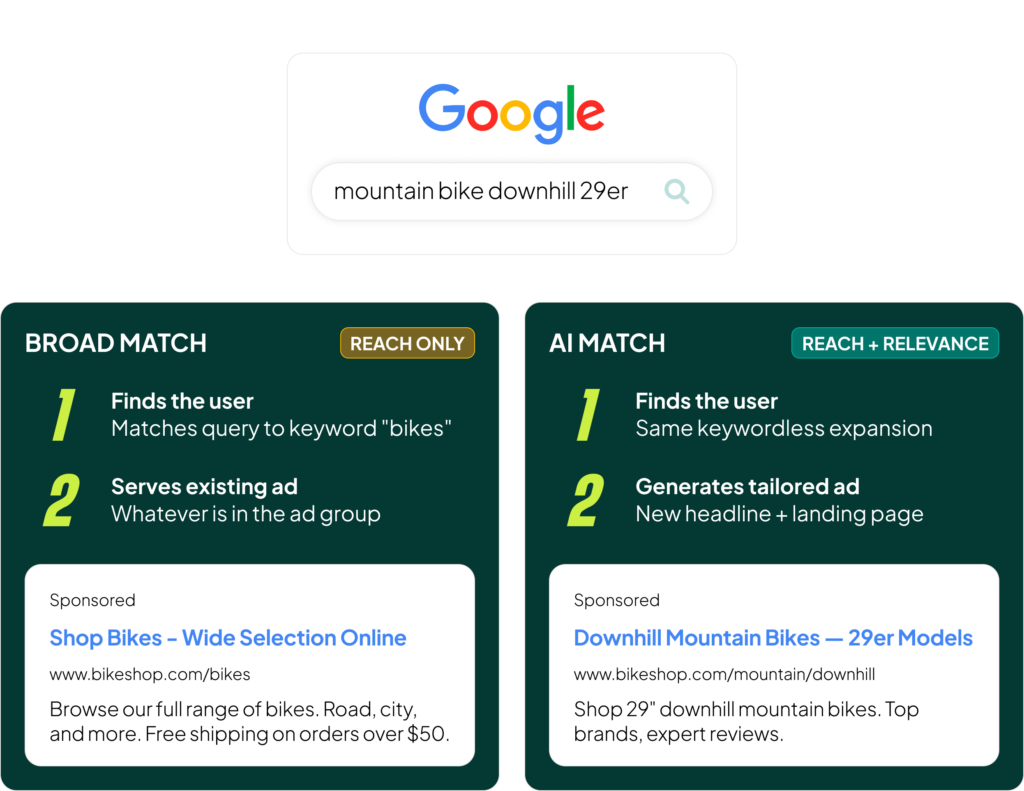
One is about reach. The other is about combining reach with relevance. In my experience, if you can combine expansion with relevance, you beat expansion-only tactics every single time.
A Practical Example
Let’s go back to an example I’ve used before. You sell outerwear and have “men’s winter jacket” as a keyword.
A user searches for “jackets like arcteryx but cheaper.”
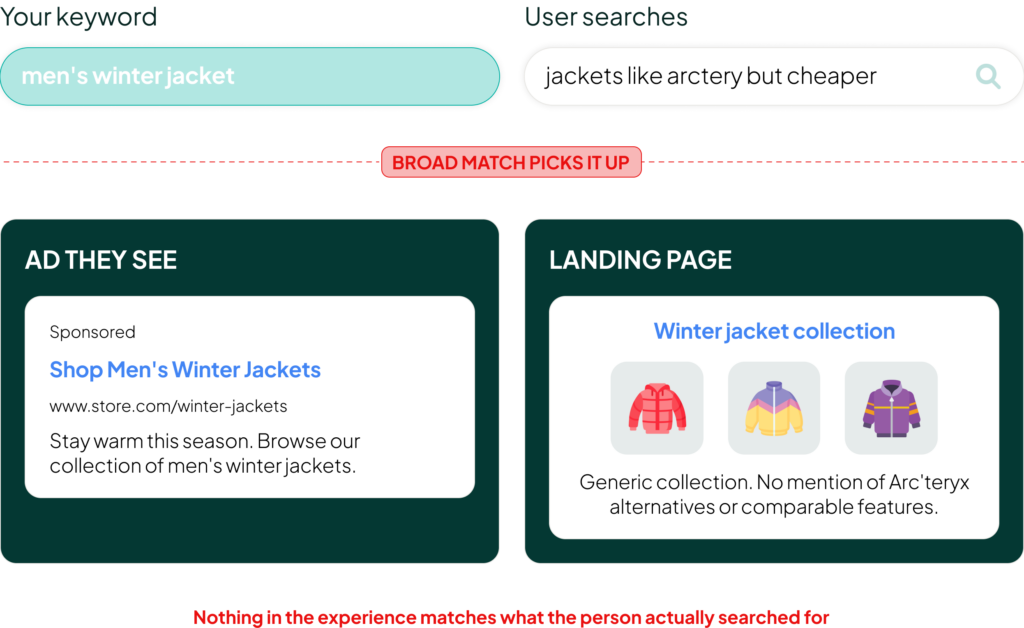
With Broad Match, your ad might get triggered. Great. But the ad headline says “Shop Men’s Winter Jackets” and links to a generic category page. Nothing in that experience acknowledges what the person actually searched for. Smart Bidding will likely see this search term perform poorly and deprioritize it, when it could have been a great customer for you.
Now, imagine the same scenario with Phrase Match + AI Max. AI Max can pick up the search for an “arcteryx alternative.” But instead of showing a static headline, it might generate something like: “Premium Winter Jackets – Starting at $149.” This ad directly addresses the price-comparison intent of the search.
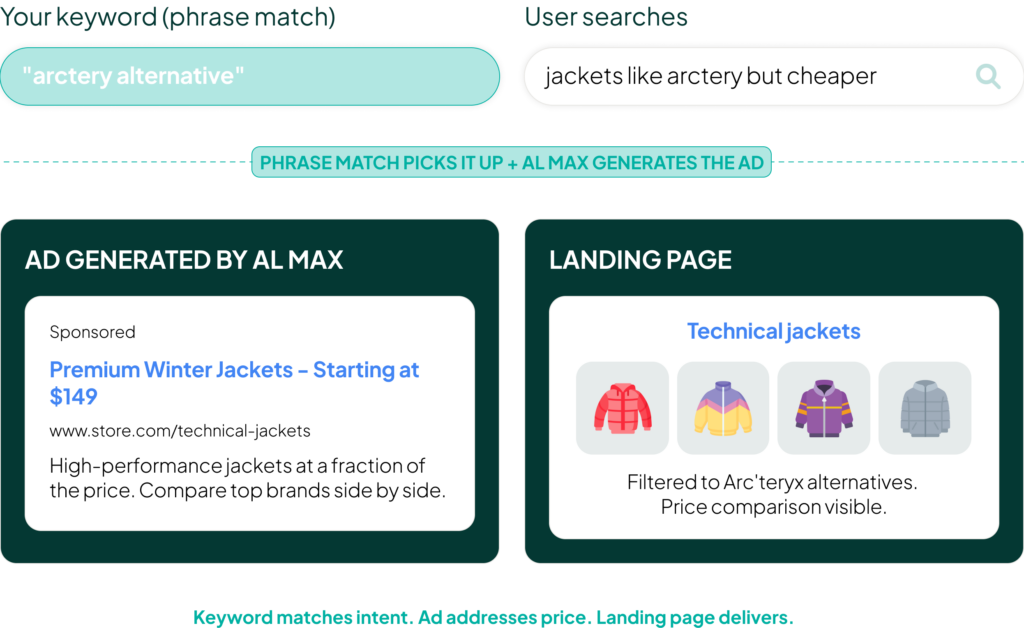
The search term → keyword → ad → landing page chain stays intact. That’s the key.
Who Stands to Benefit Most? (And Who Won’t)
AI Max, much like its predecessor DSA, isn’t a magic bullet for every account. It excels in specific scenarios.
Where it works best:
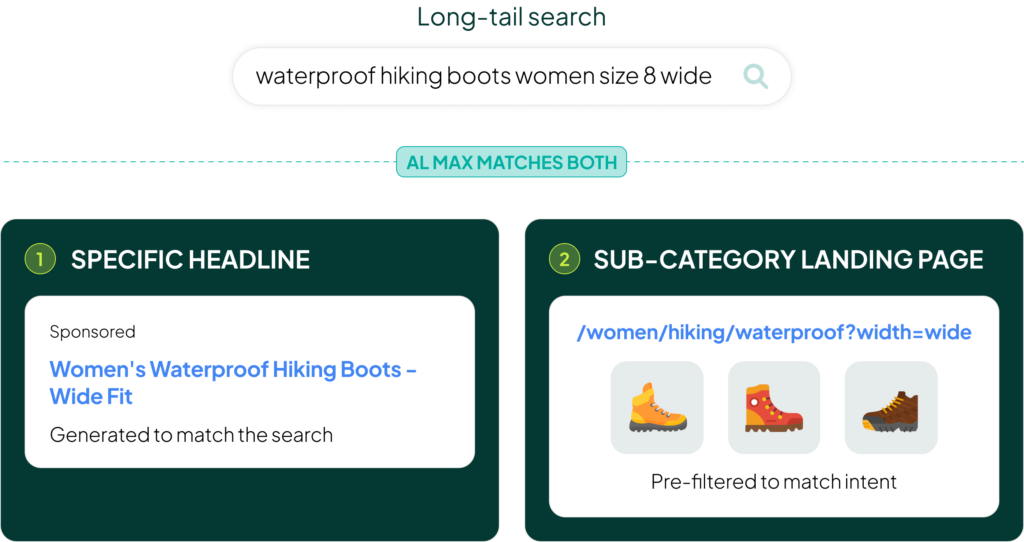
- Large Catalogs: For businesses with thousands of SKUs, DSA has always been marvelous because it can match a long-tail search to a specific product or sub-category page and show a highly relevant headline. AI Max is built to do this at an even greater scale.
- Many Countries: If you’re managing campaigns across multiple languages, it’s nearly impossible to have perfectly crafted ad copy for every mid-level category in every country. AI Max can fill those gaps, building an inventory of high-performing, auto-generated headlines over time.
Where you’ll see limited success:
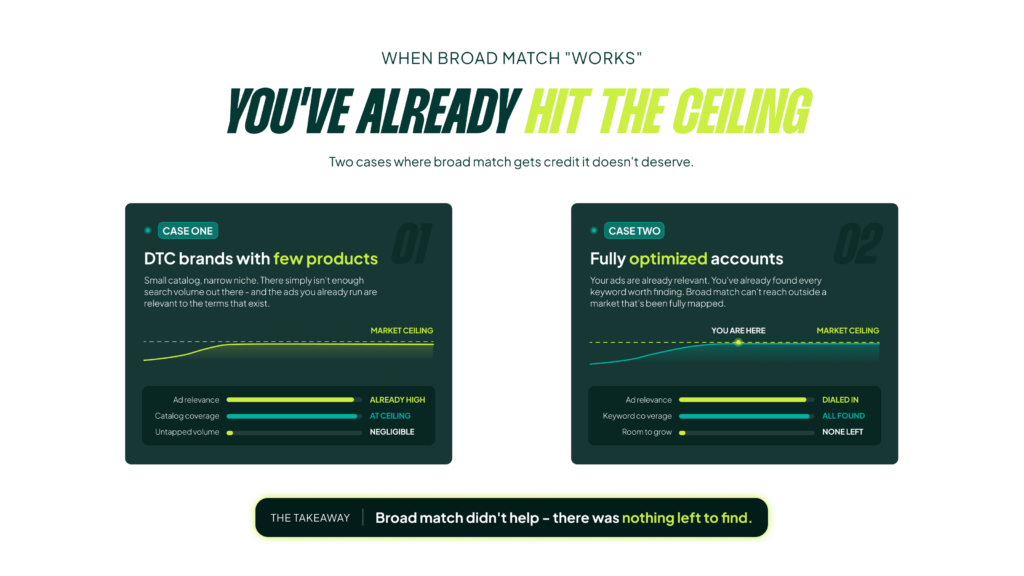
- DTC Brands with Few Products: If you only sell a handful of products, there simply isn’t enough search volume for this kind of expansion to be meaningful. Your ads are likely already highly relevant.
- Highly Optimized Accounts: If you’ve already done the hard work of finding all your valuable keywords and your ads are perfectly dialed in, there may not be much incremental volume for AI Max to find.
Why Your AI Max Tests Are Probably Failing
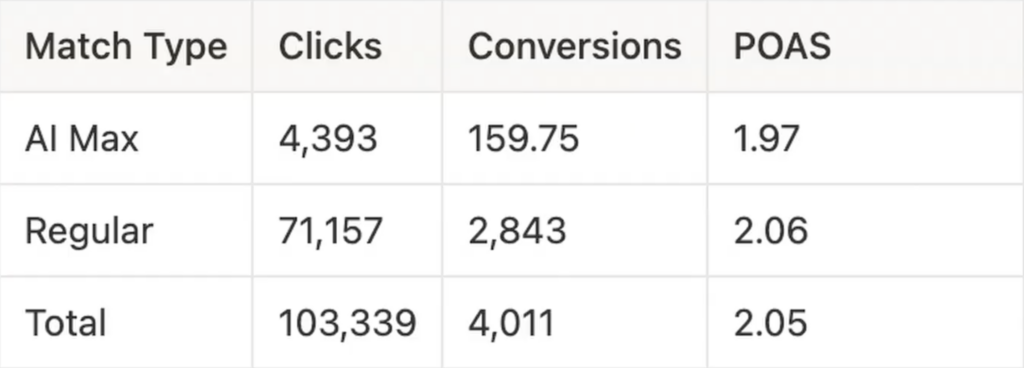
I know what many of you are thinking: “I tried AI Max and it was a disaster.” You’re not wrong. Our early tests were also lackluster.
It’s my belief that Google rushed it out before it was ready. It was apparently called “Search Max” until just a few weeks before Google Marketing Live, and it seems clear they needed a big “AI” announcement for the event. The result was a feature that didn’t work very well.
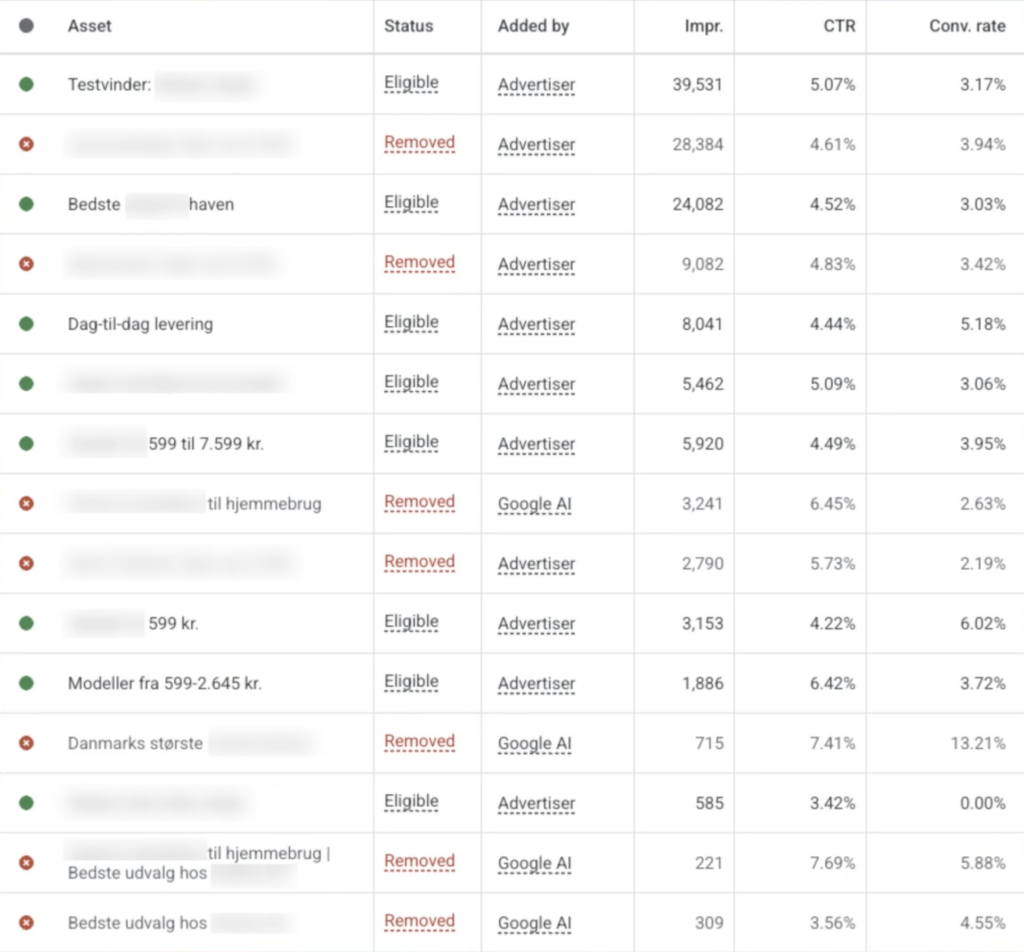
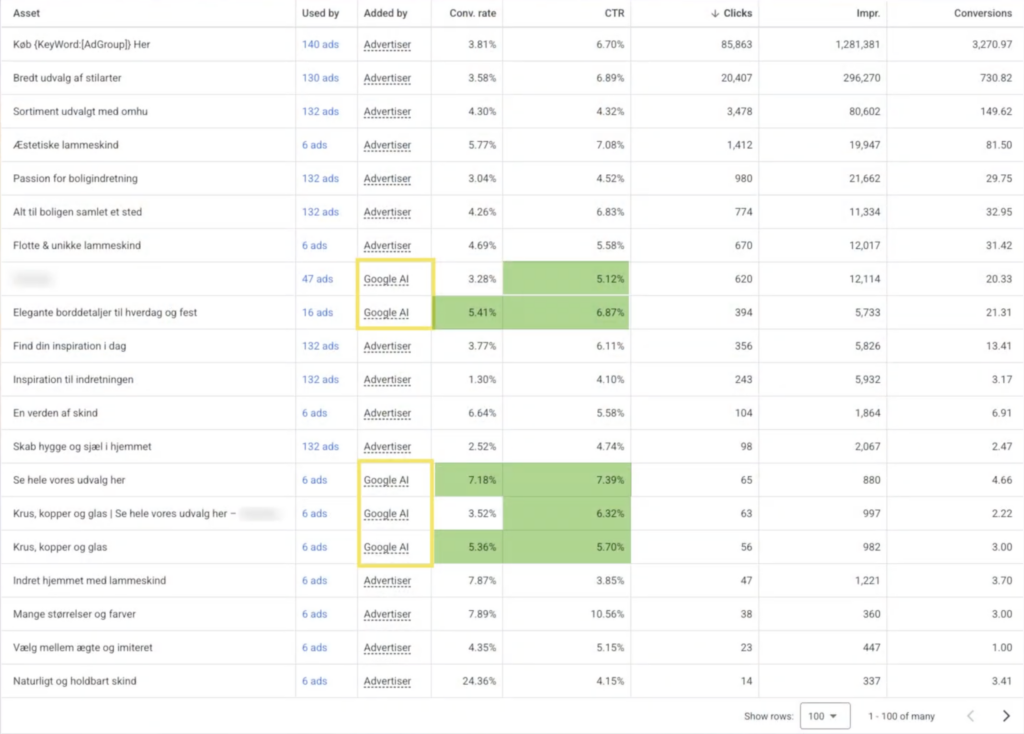
However, we’re starting to see glimpses of it working. A few AI-generated headlines are now appearing in the top 5 for performance in some campaigns. Keyword expansion is starting to happen (not a lot, but enough to notice). My feeling is that Google is treading lightly because they have such a bad reputation for writing automated ad copy.
The feature will really take off when Google releases custom instructions for asset generation (the current “restrictions” are not the same thing). When we can give the AI better context, we’ll get better output.
How to Set Up AI Max for Success (Don’t Be Lazy)
A product manager at Google said to think of AI Max as the new version of Dynamic Search Ads. That tells me we should apply the same best practices we use for DSA.
This means you need to be diligent with your exclusions:
- Exclude keywords: Get your brand terms, garbage keywords, and irrelevant terms out of there.
- Exclude non-relevant URLs: Block pages like “Terms & Conditions,” “About Us,” “Returns,” and empty category pages.
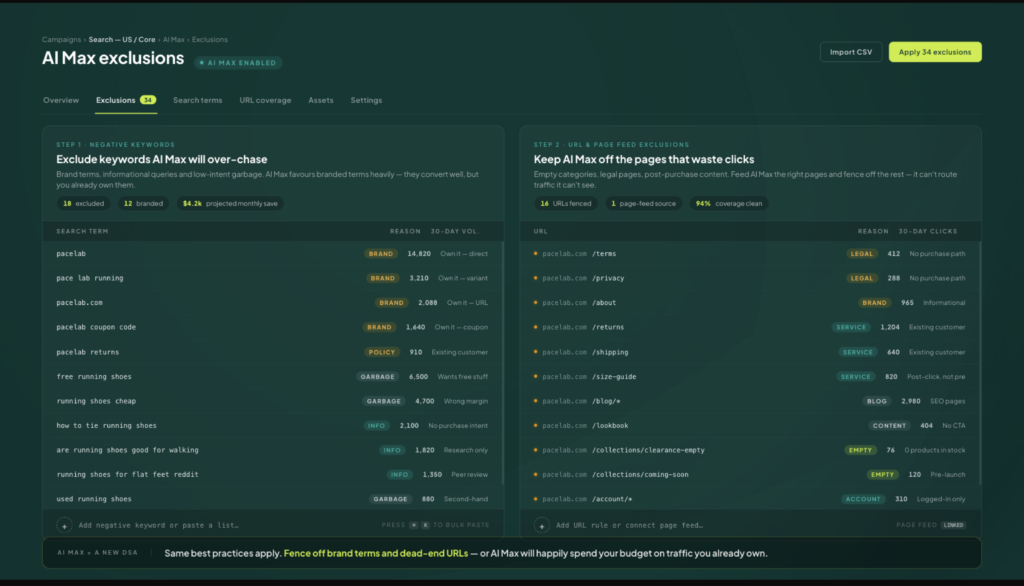
AI Max heavily favors branded terms right now, which makes sense. You probably haven’t added every variation of your brand name as a keyword, and they convert well. But letting it run wild on brand terms prevents it from doing its real job: finding new, non-brand opportunities.
The lazy approach is to turn on AI Max, see it focus on brand terms, and turn it off in frustration. This is a mistake, especially because Google has confirmed that DSA will eventually go away. Take the five minutes to add proper exclusions.
The Bottom Line
For advertisers who want 80% of the results for 20% of the time spent, I believe Phrase Match with AI Max will become the go-to setup. I’m not saying it’s perfect today, because the evidence doesn’t fully support that yet. But I am saying that more advertisers should be testing AI Max than defaulting to Broad Match.
You get the search term discovery that makes Broad Match attractive, but you combine it with the ad relevance that Broad Match could never deliver. We’re heading towards a world where Phrase Match + AI Max replaces Broad Match for most e-commerce advertisers. The ones who figure that out early will have a serious edge.
[TL;DR]
- Broad Match’s core flaw is the disconnect between a user’s search and the static ad they see, which hurts relevance and ROAS.
- Phrase Match + AI Max solves this by combining keyword expansion with dynamically generated, relevant ad copy.
- AI Max is not perfect yet (Google likely rushed its release), but it is steadily improving and shows significant promise.
- To test AI Max effectively, you must treat it like DSA and proactively exclude brand terms and irrelevant URLs.
- The future standard for scalable and relevant search campaigns will be Phrase Match + AI Max, making Broad Match obsolete for most.