Dansk
Dansk
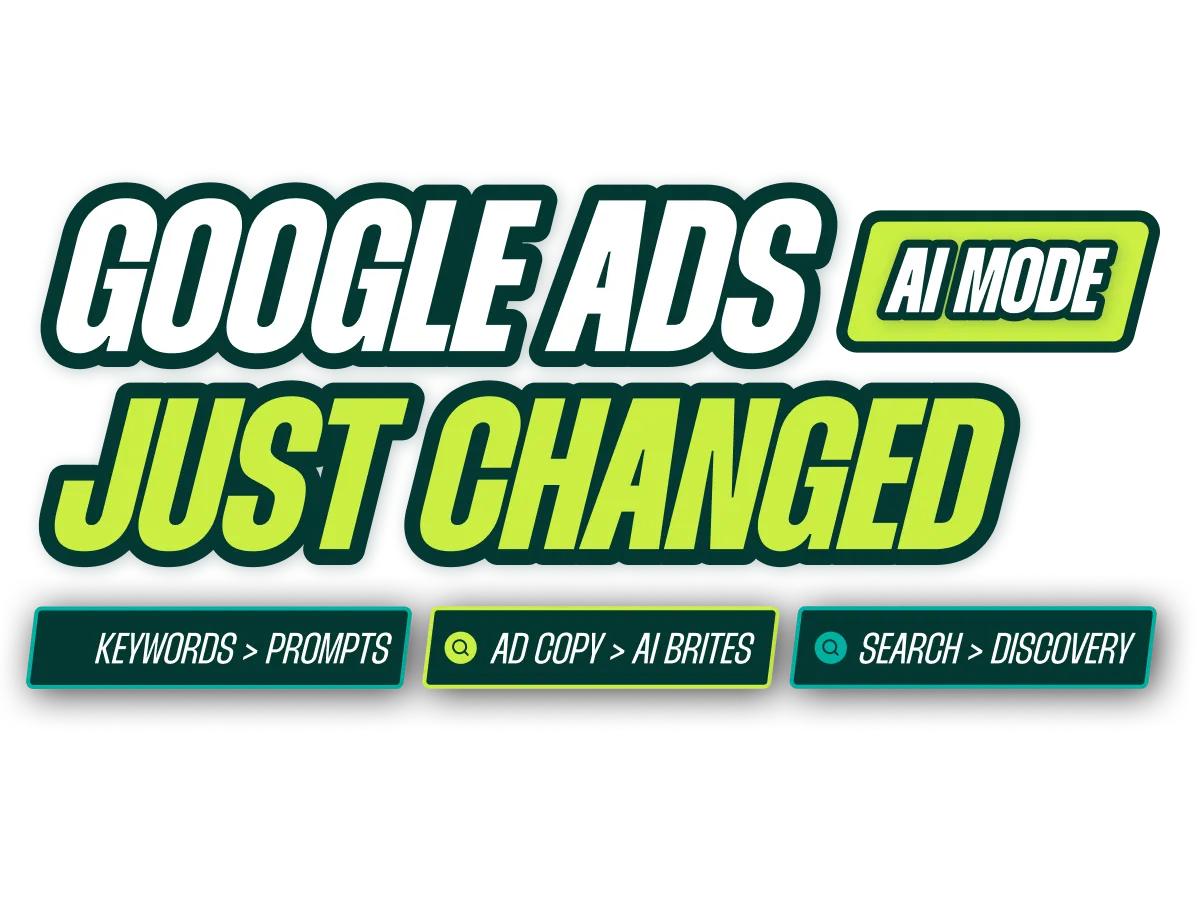
My biggest takeaways from spending a week in Mountain View is that we are seeing the biggest shift in how you should work with Google Ads — ever.
Search ads were built for a world where:
- The search query was short
- The answer was a list of links
- The ad was a few headlines, descriptions or a product card
The goal used to be a tight connection between the search, the ad, and the landing page. It’s been the holy grail of Google Ads since I started 15 years ago.
But that format starts to break when the result becomes as personalized as AI mode.
The direction is obvious: the more Google understands about the user, the query, the product feed, reviews, pricing, offers, and brand, the less sense it makes to serve the same static “New swimming goggles” headline to everyone.
Or in other words:
In a world where people expect personalized results, static assets do not scale:
15 headlines? There are thousands of personalizations.
One shopping title and image? It just seems silly looking back at it.
Providing personalized ads from a static asset library will feel primitive next to personalized, AI-generated search results.
Ecommerce and travel will feel this first because product choice has far more personalization variables than local lead gen.
So the core message with today’s video is not:
“Here is where Google Ads is going.”
It is:
“Here is what PPC specialists impact when Google takes away more of your tasks.”
notionvc: 167cec21-8c95-40dc-9f83-e917bcc87b7e
The Fundamental Shift: Ads Are Now Outputs, Not Assets
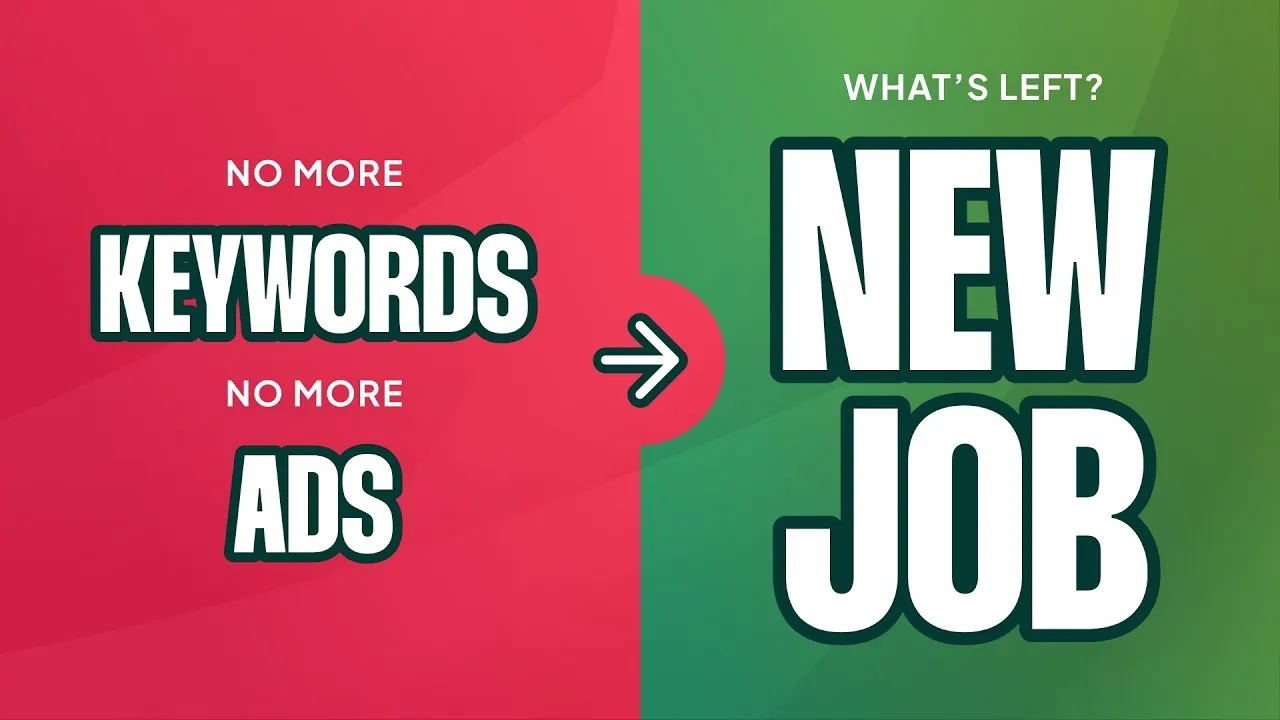
This changes everything about how we provide instructions to Google Ads. A lot of noise has been made about “removing keywords,” but I don’t think that’s where we’re headed. Keywords will likely stay, but their role will change.
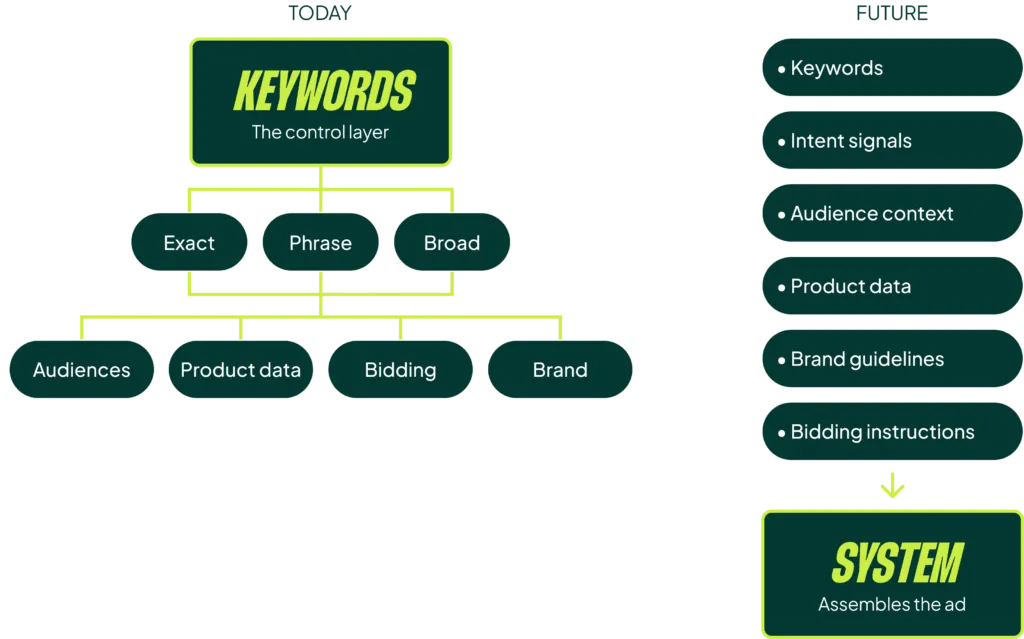
The control layer is moving away from micromanaging match types and toward defining intent range, providing bidding guidance, and crafting campaign instructions. Keywords simply become one input among many: intent signals, audience context, product data, brand guidelines, and measurement frameworks.
We’ve been using keyword-less Shopping and DSA campaigns for years, so this isn’t a completely alien concept. And now, AI is actively writing ads for us with Performance Max, providing guidelines to tell it what to do (and what not to do), and even rewriting Shopping titles on the fly. Is it perfect? No. But we’re seeing enough movement to know where this is going.
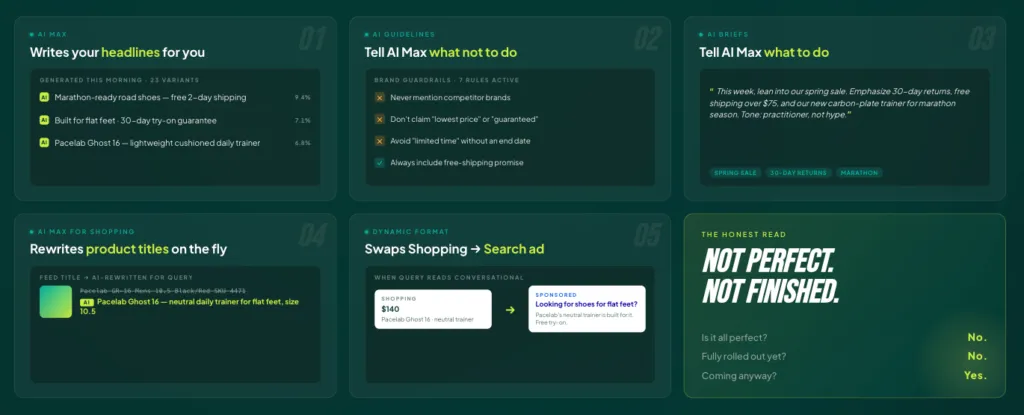
The important shift is this: the ad is no longer the strategic asset. The strategic asset is the quality of the inputs you feed the system.
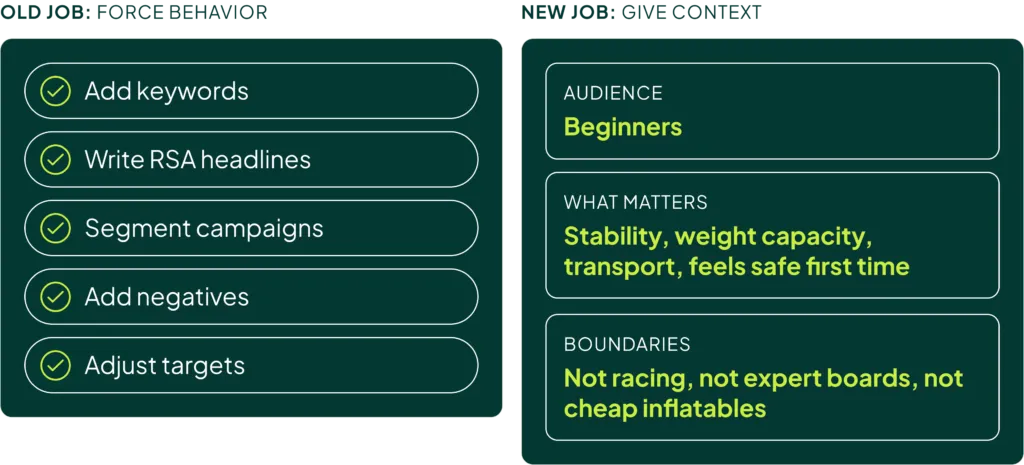
Your new job is not writing “Popular Swim Goggles 2024.” It is giving the system the underlying reasons to write that headline: who it’s for, why it matters, what proof supports the claim, and when that message absolutely should not be used.
The Big Mistake Most PPC Specialists Will Make
The danger here is that as advertisers move into this new world, they’ll cling to the old way of doing things. The result will be a complete failure to understand how to achieve excellence in this new operating model.
The mistake is treating this transition like Smart Bidding all over again: either resisting it out of fear or blindly trusting it out of ignorance.
The Smart Bidding Precedent: A Tale of Two Errors
We’ve already seen this movie play out. With Smart Bidding, we saw two disastrous approaches. Up until around 2019, Smart Bidding was a bit of a wild card. Most people didn’t know how to work it, so they’d panic and revert back to manual bidding the moment things didn’t go perfectly.
Now, I see the opposite problem. PPC specialists have become so dependent on Smart Bidding that many don’t even understand how the auction works. If you ask me, that’s criminal. You cannot be good at Smart Bidding if you don’t fundamentally understand the auction environment it operates in.
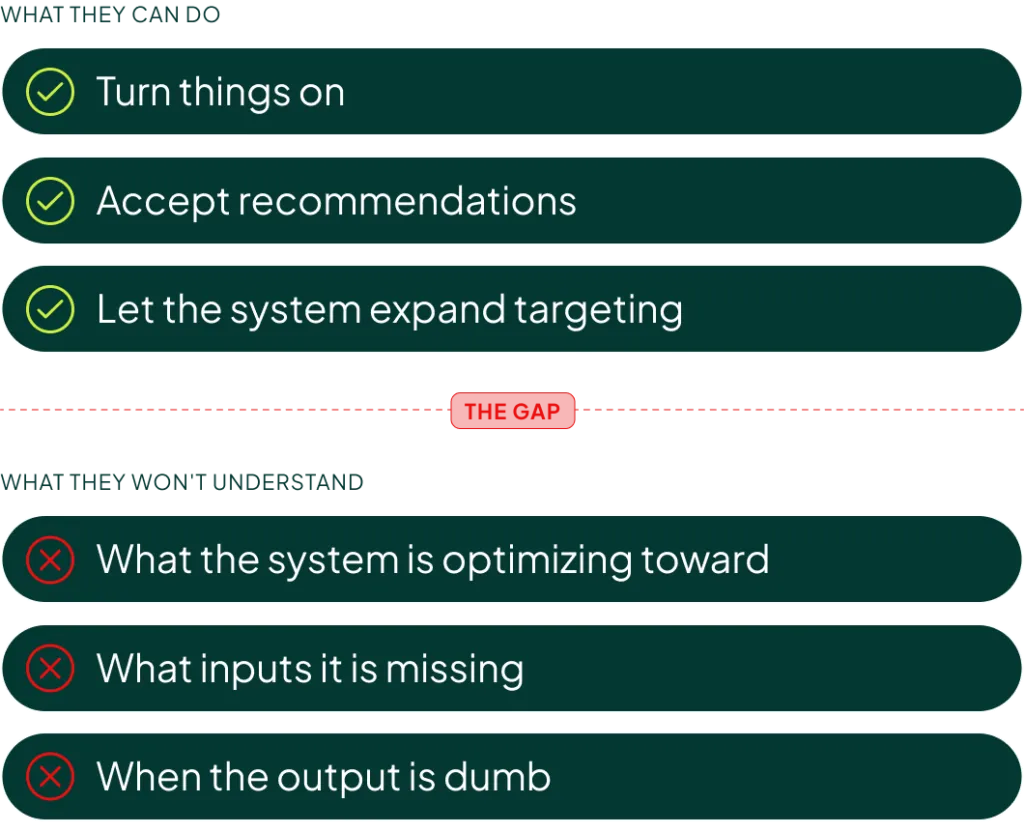
The same thing is about to happen to Google Ads as a whole. I predict that in five years, we’ll see so-called “PPC specialists” who don’t really know how Google Ads works. They’ll know how to turn things on, accept recommendations, and let the system expand targeting. But they won’t understand what the system is optimizing toward, what critical inputs it’s missing, or when its output is just plain dumb.
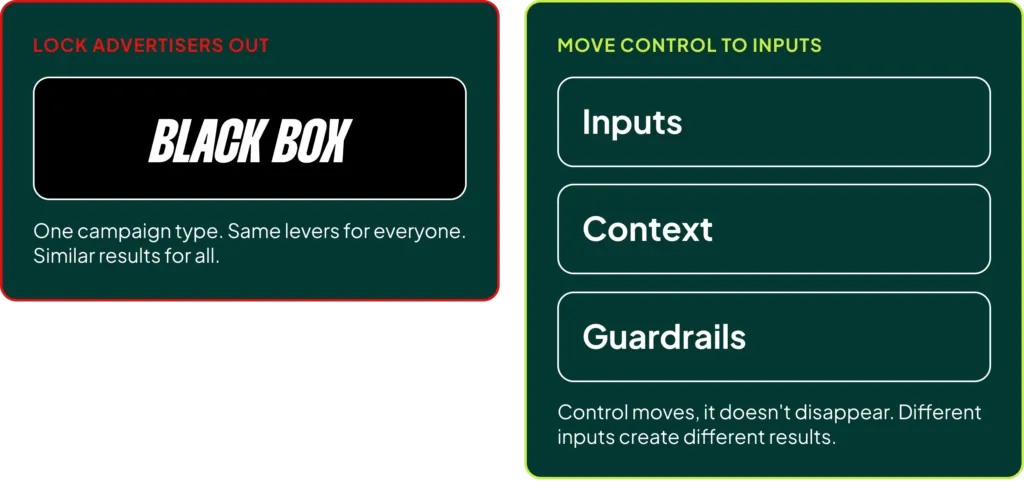
That is the real risk. Not that Google writes more ads for us. The risk is that PPC specialists stop understanding what they still control—just like we’ve seen with Smart Bidding, which is often called a “black box” by the very people who should know it’s anything but.
The New PPC Job: Your 5 Areas of Control
This is why I keep coming back to Smart Bidding. Not because this is an article about bidding, but because it’s the closest preview we have of what happens when Google moves a core PPC skill behind an algorithm. The lesson from Smart Bidding was not “algorithms are bad,” nor was it “just trust the algorithm.”
The lesson is that the people who won with Smart Bidding were not the people who clicked “enable” and walked away. They were the people who learned how to work it. They understood the auction, conversion lag, budget constraints, and the impact of target changes. They knew when the system needed more freedom and when it needed tighter limits.
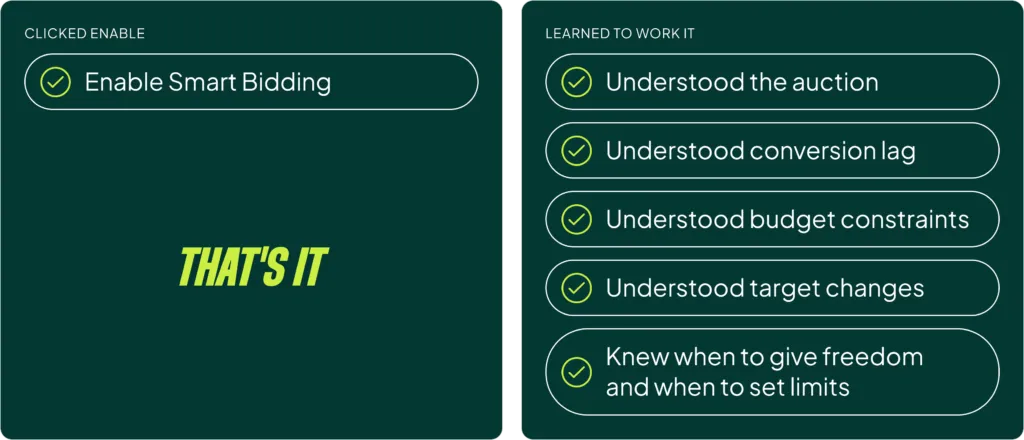
That is the exact same skill set we need now, just applied to the entire campaign creation and management process. The PPC specialist who wins in this new era will be a master of five domains.
1. Inputs
Your primary job is to feed the system better raw materials than your competitors. This includes rich product data, clear brand guidelines, compelling value propositions, customer avatars, and unique selling points. The AI can only work with what you give it.
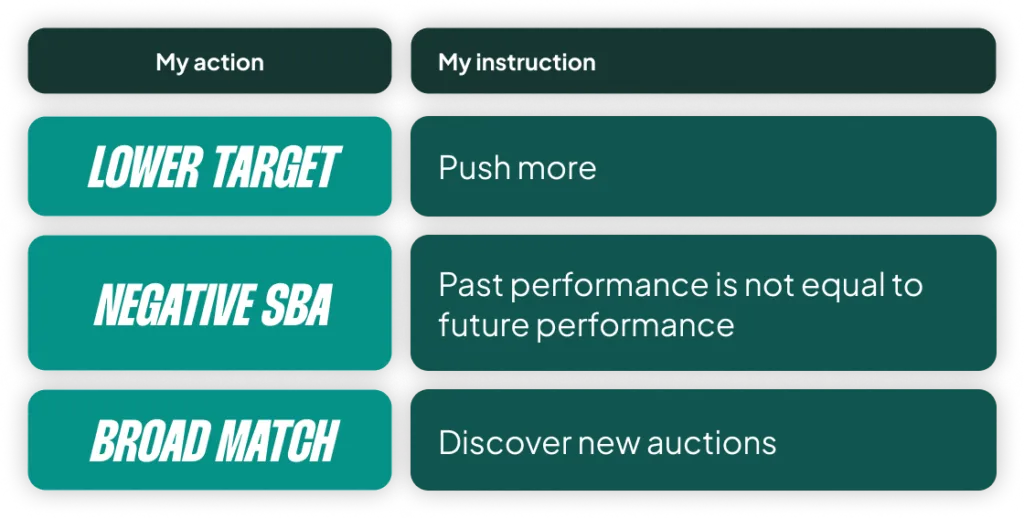
2. Structure
How you structure your campaigns and asset groups becomes a primary way to guide the AI. A well-designed structure tells the system which products, messages, and objectives belong together, creating a foundation for the AI to build upon effectively.
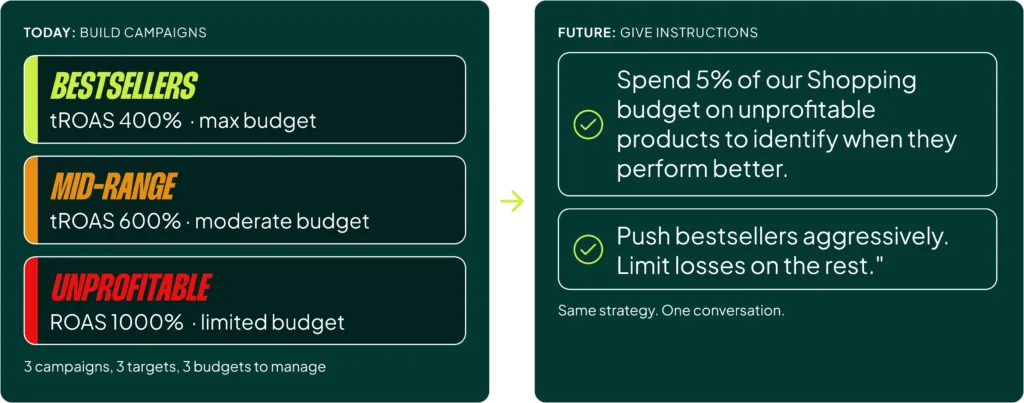
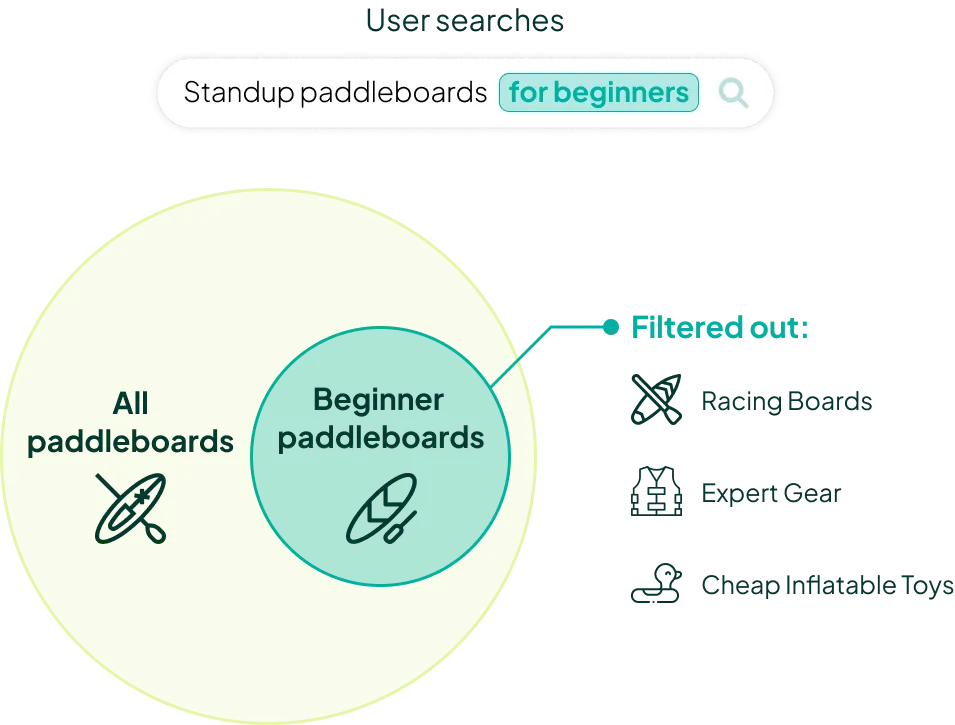
3. Guardrails
You are the strategic brain that sets the boundaries. This means defining negative constraints, brand safety rules, and messaging that should never be used. You must tell the AI where the lines are drawn so it doesn’t cross them.
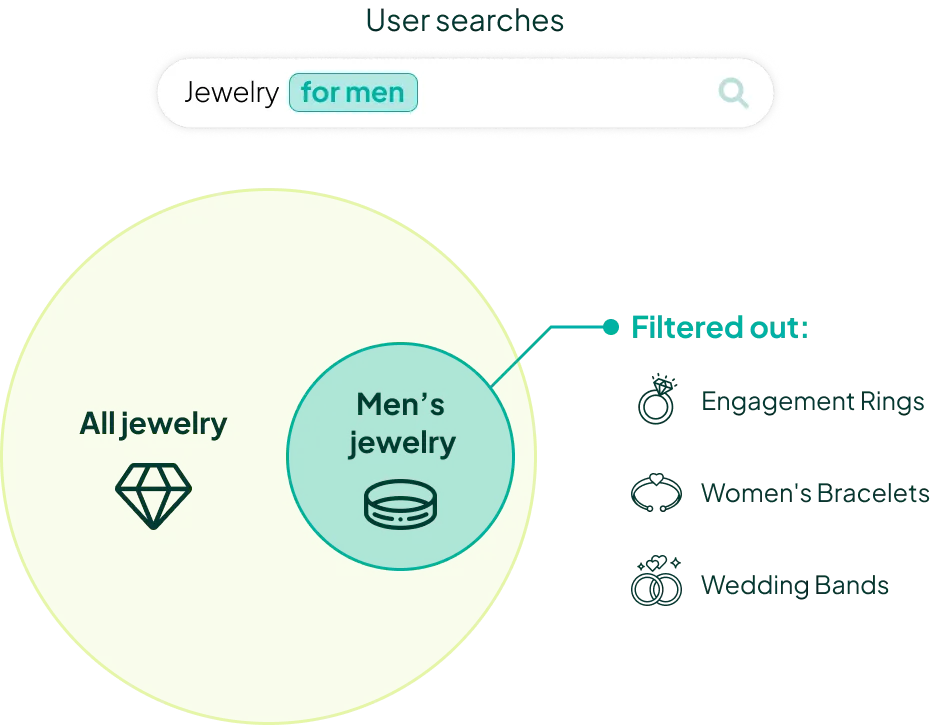
4. Overrides
An algorithm doesn’t understand a flash sale, a PR crisis, or a major supply chain disruption unless you tell it. Your job is to know when to intervene manually, override the automation, and provide crucial, time-sensitive context that the system lacks.
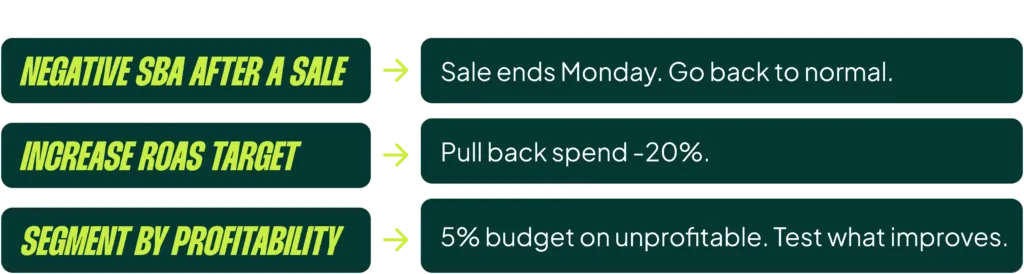
5. Measurement
Defining what success looks like is more critical than ever. You control the measurement framework. This means ensuring accurate conversion tracking, feeding the system high-quality data (like profit data), and analyzing outputs to determine if the AI is truly achieving the business’s goals, not just Google’s platform metrics.
The job isn’t going away. It’s becoming more strategic. The future of PPC management is less about writing headlines and more about being the architect of the system that does.
[TL;DR]
- Google isn’t killing Search ads, but it is changing your workflow from static asset creation to dynamic, AI-guided management.
- The ad itself is no longer the key strategic asset; the quality of the inputs you provide to the AI is what will determine success.
- The biggest mistake PPC specialists will make is either resisting the change or blindly trusting the AI, repeating the same errors made with Smart Bidding.
- The winners will be those who learn how to work with the system, not just turn it on.
- The new PPC job is defined by five key areas of control: Inputs, Structure, Guardrails, Overrides, and Measurement.